

Pressing a point on your foot and feeling a response somewhere else entirely in your body is one of those experiences that stops you mid-skepticism. Whether you’re new to complementary therapies or simply curious about what else might support your health alongside the approaches you already use, this article covers the benefits of acupressure from the ground up.
What is Acupressure?
Acupressure is a hands-on therapy rooted in traditional Chinese medicine. The core idea is that applying firm, deliberate pressure to specific points on the body can influence how you feel, physically and mentally. For anyone who has spent time in physio or chiropractic care, it may feel familiar in some ways, yet the underlying philosophy is quite different.
No electricity, needles, or equipment are required. Just pressure, applied with intention. Some practitioners may choose to use manual instruments, such as acupressure pens, mats, pillows, balls, etc.
Origins and Core Principles
Acupressure has been practiced for thousands of years, with roots in traditional Chinese medicine dating back well over two millennia. It developed alongside other practices such as acupuncture, herbal medicine, and tai chi as part of a broader system of health care that viewed the body as an interconnected whole rather than a collection of separate parts.
The core principle is that the body has a natural capacity to regulate and restore itself, and that certain points on the body can be used to support that process. Rather than targeting symptoms in isolation, traditional Chinese medicine looks at patterns across the whole person, including energy, digestion, sleep, and emotional state.
This whole-body framing is one reason acupressure continues to attract interest from people who feel that conventional approaches address symptoms but not the full picture.
The Role of Balancing Qi and Energy Pathways
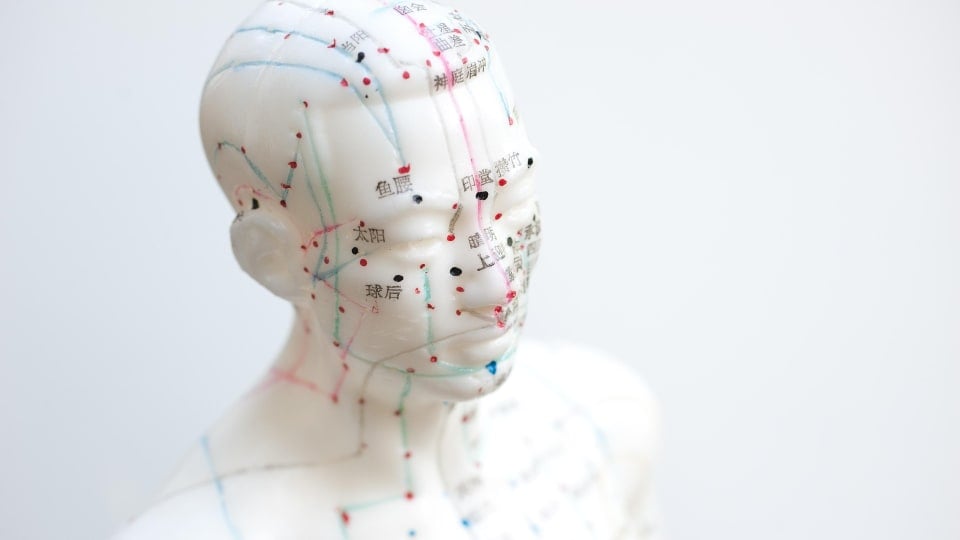
Central to acupressure is the concept of qi (pronounced “chee”), the life force or vital energy believed to flow through the body along specific pathways called meridians. Traditional Chinese medicine holds that when this flow is balanced and unobstructed, the body functions well. When it becomes blocked or disrupted, discomfort, tension, or illness may follow.
Acupressure works, in theory, by stimulating specific points along these meridians to encourage the flow of qi and restore balance. Whether you find this framework compelling or prefer to think in more physiological terms, the practical experience of pressure applied to certain points producing a noticeable response elsewhere in the body is something many people report, regardless of how they explain it.
It’s worth approaching this with an open mind rather than either full acceptance or outright dismissal. The evidence base is still developing, and the experience of acupressure often speaks for itself.
Acupressure Versus Acupuncture: Key Differences
Acupressure and acupuncture share the same theoretical foundation. Both work with meridians and pressure points, aiming to support the flow of qi through the body. The key difference is the method of stimulation.
Acupuncture uses fine needles inserted into specific points on the skin. Acupressure uses physical pressure, typically applied with fingers, thumbs, or knuckles. This makes acupressure considerably more accessible. You don’t need a practitioner to apply it; there’s no skin penetration, and many people find it noticeably more relaxing than acupuncture, particularly those who are hesitant around needles.
For someone who has been curious about acupuncture but put off by the idea of needles, acupressure offers a gentler entry point into the same tradition.
How Acupressure Works
Understanding why acupressure may produce the effects it does requires looking at two different frameworks: the traditional explanation rooted in Chinese medicine, and the more physiological explanations that researchers have been exploring. Neither tells the complete story on its own.
Pressure Points and the Meridian System
The meridian system describes a network of channels running through the body along which qi is said to travel. Each meridian is associated with a specific organ or system, such as the liver, lungs, or stomach. Along these meridians sit hundreds of acupressure points, each with a traditional name and a set of associated functions.
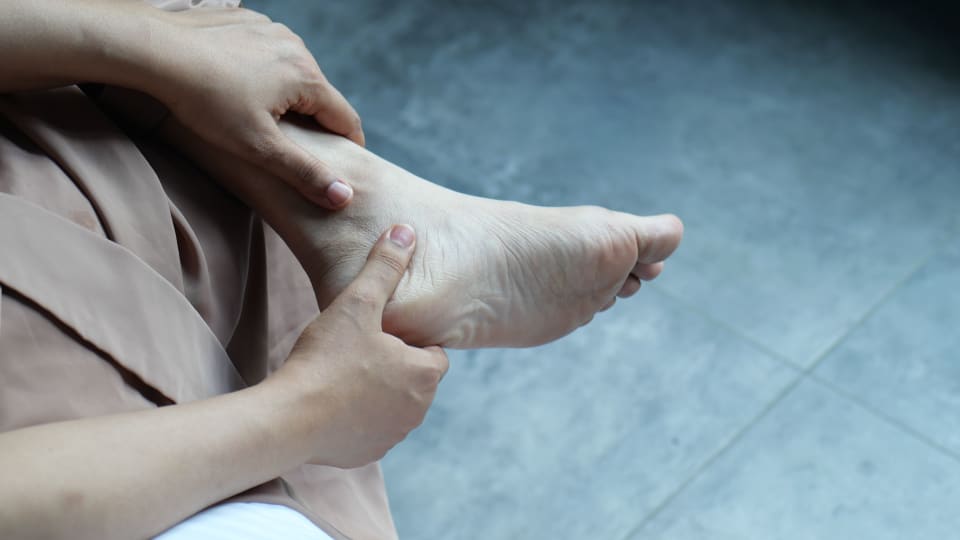
When pressure is applied to one of these points, the intention is to stimulate the meridian it sits on and, by extension, influence the organ or system connected to it. This is why pressing a point on the foot might be associated with kidney function, or a point on the wrist with nausea or anxiety. The connections are not anatomical in the conventional sense; they follow the logic of the meridian map.
What Happens in the Body During Acupressure
From a physiological perspective, researchers have proposed several mechanisms that may help explain why acupressure produces the responses it does. Applying pressure to soft tissue may stimulate nerve endings, increase local circulation, and prompt the release of endorphins, the body’s natural pain-modulating compounds.
There is also some suggestion that acupressure may influence the autonomic nervous system, shifting the body from a more activated, stress-response state toward a calmer, more restorative one. This could help explain why many people feel noticeably relaxed during and after a session.
It’s worth noting that these mechanisms are proposed rather than fully established. The research is promising in certain areas, but the picture is not yet complete, and individual responses vary considerably.
How Effective is Acupressure: What the Evidence Says
The evidence for acupressure is genuinely mixed, which is worth being upfront about. Some areas have more research support than others. Studies have looked at acupressure for nausea, pain, anxiety, and sleep, with results that are often encouraging but not always consistent.
A number of trials suggest that acupressure may reduce nausea in certain contexts, including chemotherapy-related nausea and morning sickness during pregnancy. Research on pain and anxiety has shown some positive outcomes, though study quality and methodology vary. It’s worth noting that in many acupressure studies, participants skew toward women with specific clinical conditions (cancer, pregnancy, osteoarthritis, postpartum recovery) or older adults, rather than healthy middle-aged people.
What the evidence does not yet support is the idea that acupressure is a reliable, standalone treatment for any specific condition. It’s more accurately described as a complementary approach, one that some people find genuinely useful alongside other care. Approaching it with that framing tends to lead to a more realistic and satisfying experience.
What is Acupressure Used For?
Acupressure is used across a wide range of goals and conditions. It’s rarely positioned as a replacement for medical care, but many people find it a useful addition to their broader approach to health. The areas it’s most commonly associated with include pain, stress, sleep, immunity, and various aspects of physical wellbeing.
Pain Relief
One of the most common reasons people explore acupressure is pain. This includes musculoskeletal pain such as back pain, neck tension, and headaches, as well as pain associated with conditions like arthritis or menstrual cramps.
Some people find that applying pressure to specific points provides some relief, either in the moment or over time with regular practice. The proposed mechanisms include stimulation of the body’s natural pain-modulating systems and a reduction in muscle tension. Results vary between individuals, and acupressure is generally most useful as part of a broader pain management approach rather than a single solution.
Relaxation, Stress Reduction, and Sleep Support
Acupressure is widely used for stress and relaxation, and this is one area where many people notice a fairly immediate response. Applying slow, deliberate pressure to specific points can shift the body into a more settled state, which may support both stress reduction and sleep.
For sleep in particular, some people find that working with certain points in the evening helps them wind down more easily. The experience of tension releasing under pressure, particularly in areas like the hands, feet, and wrists, can feel genuinely calming. This connects to the broader relationship between physical relaxation and sleep quality, which is one of the six lanes of the Holistic Health Highway.
Immunity, Colds, Fever, and Headache Relief
Acupressure is traditionally associated with supporting the body during illness, including colds, fever, and headaches. Certain points are thought to support immune function or ease the discomfort associated with common illnesses.
Whether this reflects a direct effect on immune activity or simply the general benefit of relaxation and improved circulation isn’t fully clear from the research. Many people report that working with these points in the early stages of a cold or headache provides some relief, even though the mechanism isn’t fully understood.
Skin, Hair, Vision, and Kidney Health
Traditional acupressure maps include points associated with skin health, hair growth, vision, and kidney function. These connections follow the meridian system rather than conventional anatomy, so they may feel less intuitive to someone coming from a Western health background.
Some people incorporate acupressure into their broader self-care routines with these goals in mind, particularly for skin and scalp health. The evidence in these areas is limited, and it would be overstating the case to suggest that acupressure is a reliable treatment for any of them. That said, as part of a consistent self-care practice, many people find value in it.
Key Acupressure Points and Their Benefits
Getting familiar with a handful of specific points is one of the most practical things you can do when starting out. The connections between points and their associated effects can feel abstract until you try them. Pressing a point on the sole of the foot and noticing a response somewhere totally different in the body is one of those experiences that makes the meridian concept feel a little less theoretical.
The points below are organized by their general area of use. Locations are described in general terms to give you a starting point, but working with a practitioner or a reliable reference guide can help you find them more precisely.
Points for Stress, Anxiety, and Sleep: Third Eye, Nei Guan, Kidney 1
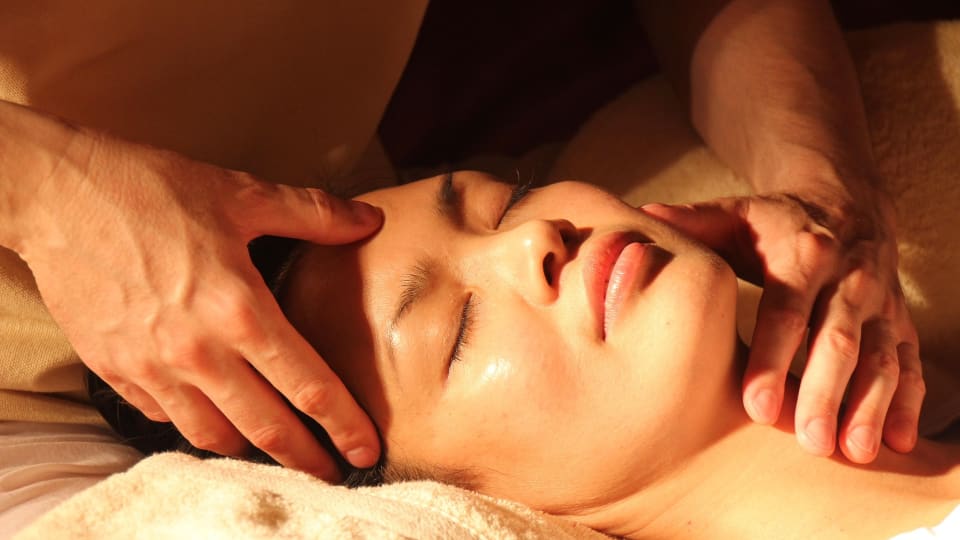
The Third Eye point sits between the eyebrows, at the bridge of the nose. It’s traditionally associated with calming the mind, reducing anxiety, and supporting sleep. Gentle pressure here can feel immediately settling.
Nei Guan (Pericardium 6) is located on the inner forearm, a few finger-widths above the wrist crease, between the two central tendons. It’s one of the most widely recognized acupressure points and is commonly used for nausea, anxiety, and emotional tension. You may have seen wristbands designed to apply pressure to this point for motion sickness.
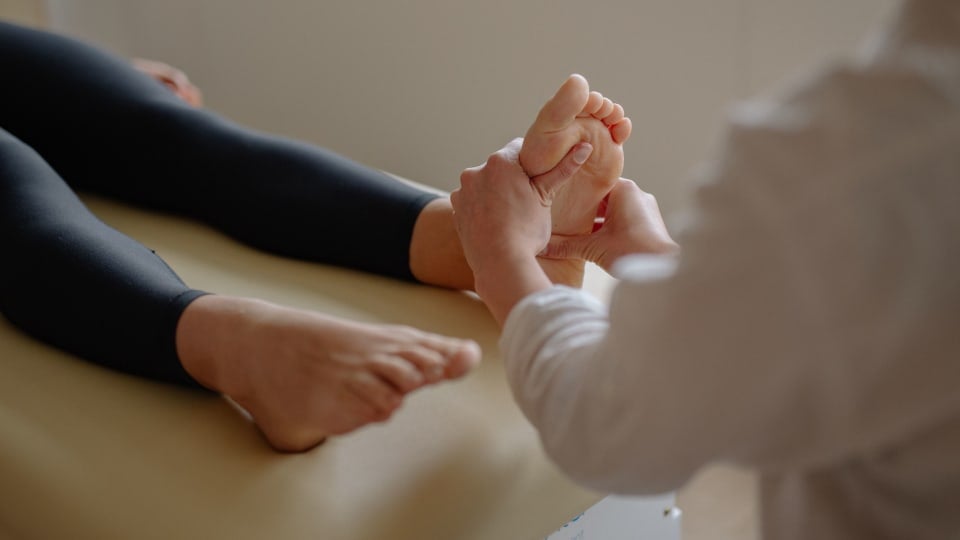
Kidney 1 is found in the depression on the sole of the foot when the toes are curled. It’s traditionally associated with grounding, calming the nervous system, and supporting sleep. Pressing this point is one of those moments where the connection between the foot and the rest of the body becomes surprisingly tangible.
Points for Digestion and Energy: Stomach 36, Weishu, Qihai
Stomach 36 (also called Zusanli) is located on the outer lower leg, below the knee. It’s one of the most frequently used points in traditional Chinese medicine and is associated with digestive health, energy, and general vitality. Some practitioners describe it as a point for overall strengthening.
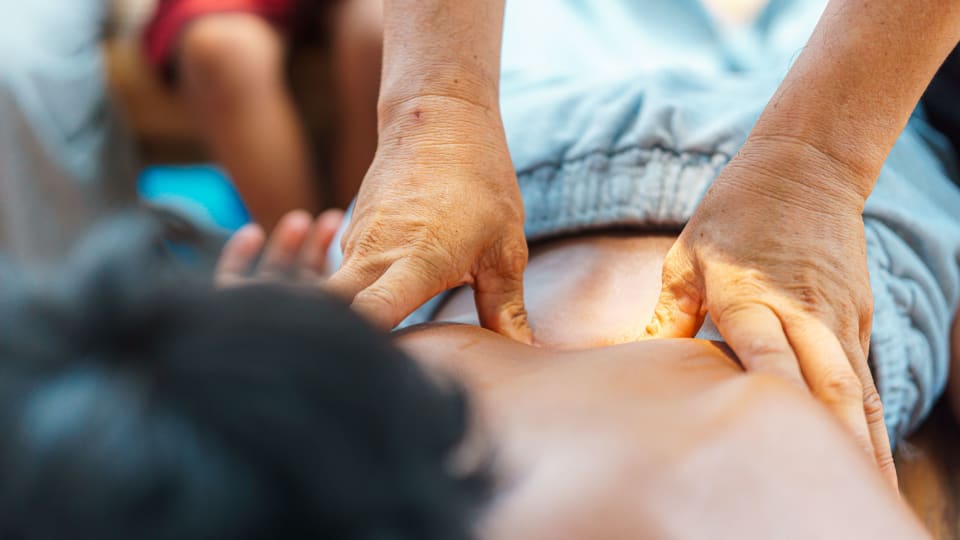
Weishu is a back point located near the lower thoracic spine (the lower part of the upper back), on either side of the spine. It’s traditionally used to support digestive function and is often worked on by practitioners rather than self-applied.
Qihai, meaning “sea of qi,” sits on the lower abdomen, a short distance below the navel. It’s associated with energy, vitality, and digestive health, and is considered an important point for overall well-being in traditional Chinese medicine.
Points for Respiratory and Cardiovascular Health: Ren 17, LI20, PC6
Ren 17 (also called Shanzhong) is located at the center of the chest, roughly level with the nipple line. It’s associated with the lungs and heart, and is traditionally used to support respiratory function and ease chest tension.
LI20 (Large Intestine 20) sits at the base of the nostrils, on either side of the nose. It’s commonly used for nasal congestion, sinus pressure, and respiratory discomfort. Many people find it helpful during colds or allergy-related congestion.
PC6, which overlaps with Nei Guan described above, is also associated with cardiovascular support and is used in traditional practice for palpitations and chest discomfort alongside its better-known use for nausea and anxiety.
Points for Ear, Nerve, and Hypertension Support: Ear Gate, Kidney Six
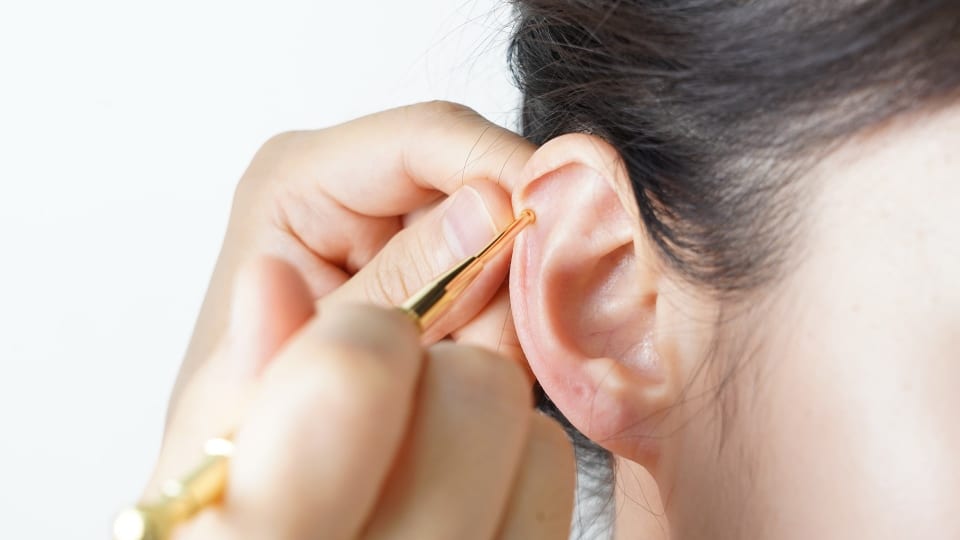
Ear Gate (also called Ermen or Triple Warmer 21) is located just in front of the ear, near the top of the tragus. It’s traditionally associated with ear health, including tinnitus and hearing-related concerns, as well as nerve function in the surrounding area.
Kidney 6 is found on the inner ankle, just below the ankle bone. It’s associated with kidney function, sleep, and nervous system calming. In traditional Chinese medicine, the kidney meridian is associated with a wide range of functions, including energy reserves and stress resilience, making it a point that appears in many contexts.
Acupressure Techniques and How to Get Started
One of the things that makes acupressure genuinely accessible is that you do not need any equipment, a large time commitment, or prior experience to begin. Many people find it more relaxing than acupuncture precisely because there are no needles involved.
Core Techniques: Pressure, Rotation, and Holding
The three most common techniques used in acupressure are direct pressure, rotation, and holding.
- Direct pressure involves applying firm, steady pressure to a point using a fingertip, thumb, or knuckle. The pressure should feel noticeable but not painful.
- Rotation involves applying pressure while making small circular movements over the point. This can help stimulate the area more actively and is often used when a point feels particularly tense.
- Holding means applying steady pressure and simply maintaining it for a period of time, allowing the tissue to respond gradually. This is often the most relaxing technique and is well suited to points associated with stress and sleep.
Direct pressure can mean the same thing as holding, depending on the practitioner. Direct pressure could either be used in a more rhythmic way, applying pressure for a few seconds at a time. Or, it could be applied for several minutes at once, which is essentially the same as holding.
The right amount of pressure varies between individuals and between points. A general guide is to apply enough pressure to feel a distinct sensation, sometimes described as a dull ache or a sense of release, without causing sharp pain.
Types of Acupressure and Choosing the Right Approach
There are several recognized styles of acupressure, each with a slightly different emphasis.
- Jin Shin is a gentler style that uses light touch and holding rather than firm pressure. It is well-suited to people who prefer a more subtle approach or are new to bodywork.
- Shiatsu is a Japanese style that incorporates acupressure principles alongside broader bodywork techniques. It tends to involve more movement and is typically applied by a practitioner.
- Tui Na is a Chinese therapeutic massage that includes acupressure as part of a broader system of manual techniques. It’s generally more vigorous than Jin Shin.
If you’re starting out on your own, a gentler approach is a reasonable place to begin. You can adjust based on what feels right for your body and your goals.
Practical Tips for Beginners
Starting simply is the most sustainable approach. A few points practiced consistently will give you more useful information about how your body responds than trying to work through a long list all at once.
- Find a quiet, comfortable position before you begin. Sitting or lying down both work well.
- Start with points that are easy to locate and self-apply, such as Nei Guan on the inner wrist or the Third Eye point between the eyebrows.
- Apply pressure gradually rather than all at once, and pay attention to how the area feels under your fingers.
- Notice any sensations that arise, including warmth, a sense of release, or a response elsewhere in the body.
- Keep sessions short to begin with. Even a few minutes of focused attention on one or two points can be informative.
There’s no single correct routine. The goal is to build a practice that feels manageable and that you can return to regularly.
Who Should Try Acupressure and Who Should Avoid it?
Acupressure is generally considered accessible for a wide range of people. It’s non-invasive, requires no equipment, and can be adapted to suit different needs and comfort levels. That said, some situations warrant a little more caution.
Ideal candidates and common use cases
Acupressure may be worth exploring if you’re looking for a complementary approach to managing stress, tension, mild pain, or sleep difficulties. It’s also commonly used by people who want a self-care practice they can apply independently, without needing to book an appointment or purchase anything.
People who tend to find acupressure particularly useful include those dealing with:
- Ongoing tension or stress that conventional approaches haven’t fully addressed
- Mild to moderate sleep difficulties
- Nausea, including travel sickness or morning sickness
- Headaches and general muscle tension
- A desire to feel more connected to their body and its signals
It’s also a reasonable option for people who are curious about traditional Chinese medicine but not ready to commit to acupuncture.
Risks, Safety Considerations, and Contraindications
For most healthy adults, acupressure applied with reasonable care carries a low risk of harm. The most common experience is temporary soreness at the point of pressure, which typically resolves quickly.
There are some situations where caution is appropriate:
- Pregnancy: Certain acupressure points are traditionally contraindicated during pregnancy because they are thought to stimulate uterine contractions. If you’re pregnant, it’s worth consulting a qualified practitioner before using acupressure, particularly on points in the lower abdomen, lower back, and certain points on the hands and feet.
- Open wounds, bruising, or skin conditions: Avoid applying pressure directly to broken skin, bruised tissue, or areas affected by a skin condition.
- Bone fractures or recent surgery: Don’t apply pressure to areas healing from injury or surgery.
- Blood clotting conditions or anticoagulant medication: People with clotting disorders or those taking blood thinners may want to seek professional advice before using acupressure.
- Cancer: Some practitioners advise caution around tumor sites. If you’re undergoing cancer treatment, check with your medical team before adding acupressure to your routine.
None of these situations necessarily rule out acupressure entirely, but they do suggest that professional guidance is a sensible first step.
Frequently Asked Questions About Acupressure
For most people, yes. Acupressure is gentle enough to be used daily, and many people find that regular practice is where the most noticeable benefits accumulate. That said, how often you use it and for how long is something to adjust based on your own experience. If a particular point feels sensitive or overstimulated, giving it a day or two of rest is a reasonable response. Consistency tends to matter more than intensity.
Some people find it genuinely useful for sleep, particularly when tension or a busy mind is what is getting in the way. Working with calming points in the evening, such as Kidney 1 on the sole of the foot or the Third Eye point between the eyebrows, can create a sense of physical release, making it easier to settle. Whether it helps with sleep specifically will depend on what’s driving the difficulty, but as part of a broader wind-down routine, it’s worth trying.
Acupressure can be used during pregnancy, but with care. As noted in the safety section above, certain points are traditionally avoided because of their association with stimulating contractions or affecting the uterus. If you’re pregnant and interested in using acupressure, working with a practitioner experienced in prenatal care is the safest way to do so. Self-applying gentle pressure to safe areas, such as the inner wrist for nausea, is generally considered low risk, but when in doubt, checking with your midwife or healthcare provider is always a sensible step.
Acupressure is one of those practices that rewards a little patience and an open mind. Starting with a small number of points, noticing how your body responds, and building from there is a more useful approach than trying to learn everything at once. The benefits of acupressure are most likely to show up through consistent, low-pressure practice rather than a single session.
If stress, sleep, or tension are areas you want to address, the points covered in this article give you a practical starting point. And if you’re curious about going deeper, working with a qualified practitioner can help you get more from the practice.
What questions do you have about getting started? Leave them in the comments below.



0 Comments