

Getting stronger and building muscle doesn’t require a complicated program or countless hours in the gym. A handful of well-chosen movements, done consistently, can take you a long way. Read on for the best compound exercises to include in your training, whether you’re just starting out or looking to sharpen what you are already doing.
(This post includes affiliate links for which we may earn a commission at no extra cost to you should you make a purchase. See our full disclosure and Privacy Policy for more information)

What are Compound Exercises?
A compound exercise is any movement that recruits multiple muscle groups and involves more than one joint working at the same time. A squat, for example, loads the hips, knees, and ankles while engaging the quads, hamstrings, glutes, and core simultaneously. Compare that to a leg extension machine, which isolates the quadriceps through a single joint, and the difference becomes clear.
Compound movements are sometimes called multi-joint exercises, and that label captures the idea well. They reflect the way your body naturally moves in everyday life, where muscles rarely work in isolation.
Compound vs. Isolation Exercises Explained
Isolation exercises target one specific muscle group through a single joint movement. Bicep curls, tricep pushdowns, and lateral raises are common examples. They have a place in training, especially for addressing muscle imbalances or adding volume to a specific area, but they aren’t the most time-efficient way to build overall strength.
Compound movements, by contrast, spread the load across multiple muscles and joints. This means more muscle tissue is being challenged in a single exercise, which is a good thing for both strength development and the overall demand placed on your body.
Neither approach is inherently superior. Many well-designed programs include both. The distinction matters because it helps you understand why compound training tends to form the backbone of most strength and muscle-building programs.

Why Compound Movements Matter for Your Training
Here’s the thing: most people have limited time to train. Compound movements let you do more with less. Because they recruit large amounts of muscle tissue at once, they tend to produce a greater training stimulus per unit of time than isolation work alone.
They also carry over to real life in a way that single-joint exercises often don’t. Picking something up off the floor, carrying groceries, pushing a heavy door, and climbing stairs all draw on the same movement patterns that compound exercises train. That functional carry-over is part of what makes them worth prioritizing, regardless of your fitness goals.
Benefits of Compound Exercises
Build Muscle and Strength Efficiently
When multiple muscle groups work together, the overall training stimulus is greater than what you’d get from targeting each muscle individually. This is one reason compound movements usually produce meaningful strength and muscle gains over time, particularly for people who train consistently.
Research in exercise science consistently supports multi-joint training as a reliable way to develop both muscular strength and hypertrophy. The degree of progress varies depending on training history, genetics, consistency, and how well recovery is managed. However, the general principle holds across a wide range of populations.
For people with limited training time, this efficiency matters. A session built around a few well-chosen compound lifts can challenge the whole body without needing hours of work.
Burn More Calories and Support Weight Loss
Because compound exercises recruit more muscle mass, they tend to demand more energy than isolation movements. This makes them a useful tool for people whose goals include managing body composition, though training is only one part of that picture.
Nutrition, sleep, stress, and overall lifestyle all play a role in how your body responds to exercise. Compound training can support weight management goals, but it works best as part of a broader approach rather than a standalone solution.
The energy demand of a session built around squats, deadlifts, and rows is meaningfully different from one built around curls and calf raises. That difference adds up over time.
Improve Mobility, Coordination, and Athletic Performance
Moving through full ranges of motion helps support joint health and mobility over time. Coordination also improves with compound training. Learning to synchronize multiple muscle groups, maintain posture under load, and control movement through space builds neuromuscular skill that carries over to sport, recreation, and everyday physical tasks.
For athletes, this transfer is particularly relevant. Most sports require the body to generate and absorb force across multiple joints simultaneously. Compound training mirrors that demand in a way that isolation work can’t replicate.

The Best Compound Exercises to Include in Your Program
Squat
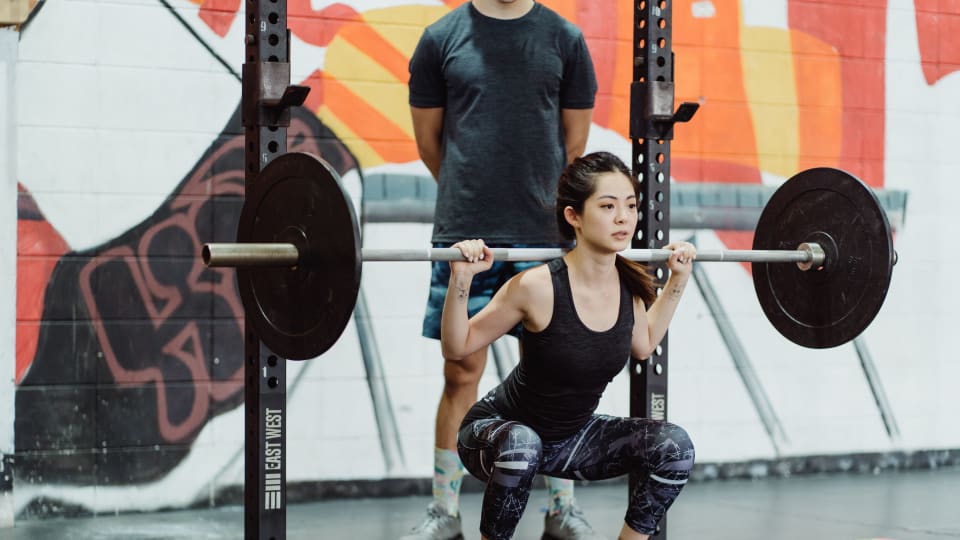
The squat is one of the most fundamental human movement patterns. It primarily targets the quadriceps, glutes, and hamstrings, with meaningful contribution from the core and lower back to maintain an upright torso.
To perform a basic squat, stand with feet roughly shoulder-width apart, and toes turned out slightly. Lower your hips toward the floor by bending at the knees and hips simultaneously, keeping your chest up, your core strong, and your knees in line with your toes. Return to standing by driving through your hips and feet.
A few form cues worth keeping in mind:
- Keep your weight distributed evenly across your feet
- Aim to keep your torso as upright as possible throughout the movement
- Depth matters, but only as far as your mobility allows without your lower back rounding
Variations include the goblet squat (holding a dumbbell or kettlebell at chest height), the barbell back squat, the front squat, and the box squat. For newer lifters, the goblet squat is often a good starting point because the counterbalance helps with posture and depth.
Deadlift
The deadlift trains the posterior chain, which includes the hamstrings, glutes, and lower back, along with the upper back, traps, and core. It is one of the most effective exercises for building total-body strength.
The conventional deadlift starts with the bar on the floor (or a dumbbell in each hand). Stand with feet hip-width apart, hinge at the hips to grip the bar just outside your legs, and set your back flat before you lift. Drive through the floor as you stand, keeping your core muscles strong and the bar close to your body throughout.
Key form cues:
- Set your back before you pull; a rounded lower back under load increases injury risk
- Think about pushing the floor away rather than pulling the bar up
- Keep your shoulders slightly in front of the bar at the start of the lift
Variations include the Romanian deadlift (which emphasizes the hamstrings and glutes through a hip-hinge with soft knees), the sumo deadlift (with a wider stance and greater hip involvement), and the trap bar deadlift (often easier for beginners to learn). Form and control matter far more than the weight on the bar, particularly when you are learning the movement.

Bench Press
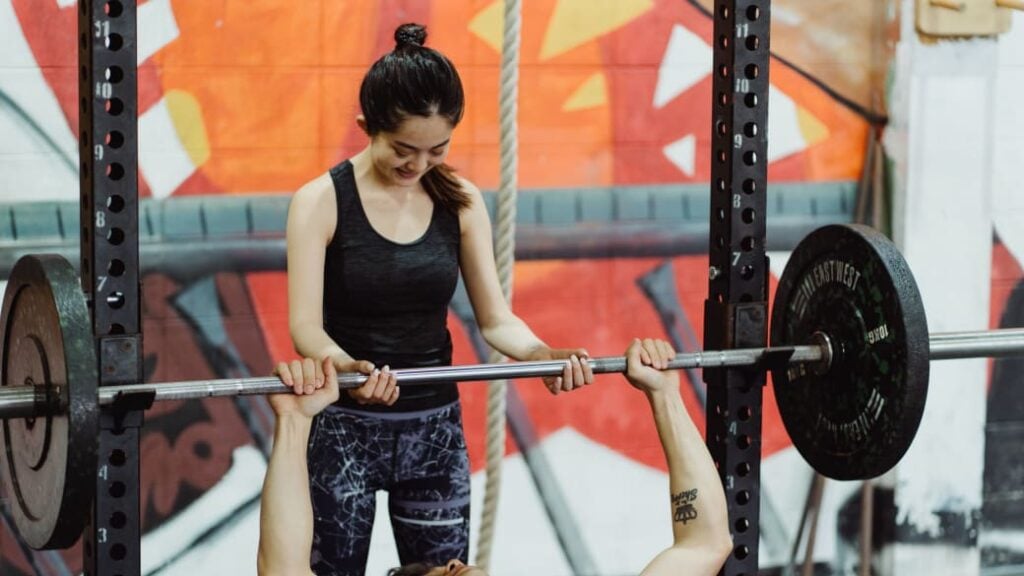
The bench press is an upper-body pushing exercise found in most strength programs. It targets the pectorals (chest), anterior deltoids (front of the shoulder), and triceps.
Lie on a flat bench with your feet flat on the floor. Grip the bar slightly wider than shoulder-width, lower it to your mid-chest with control, and press it back up to the starting position. Keep your shoulder blades back and down and your lower back in a neutral postition throughout.
Form cues to keep in mind:
- Don’t let your elbows flare out excessively; a slight angle inward reduces shoulder strain
- Lower the bar with control rather than letting it drop
- Keep your feet grounded and your body stable throughout the movement
Variations include the dumbbell bench press (which allows a greater range of motion and works each side independently), the incline bench press (shifts emphasis toward the upper chest and shoulders), and the close-grip bench press (increases tricep involvement). Dumbbells are a practical option for home training or when a barbell is not available.
Pull-up and chin-up
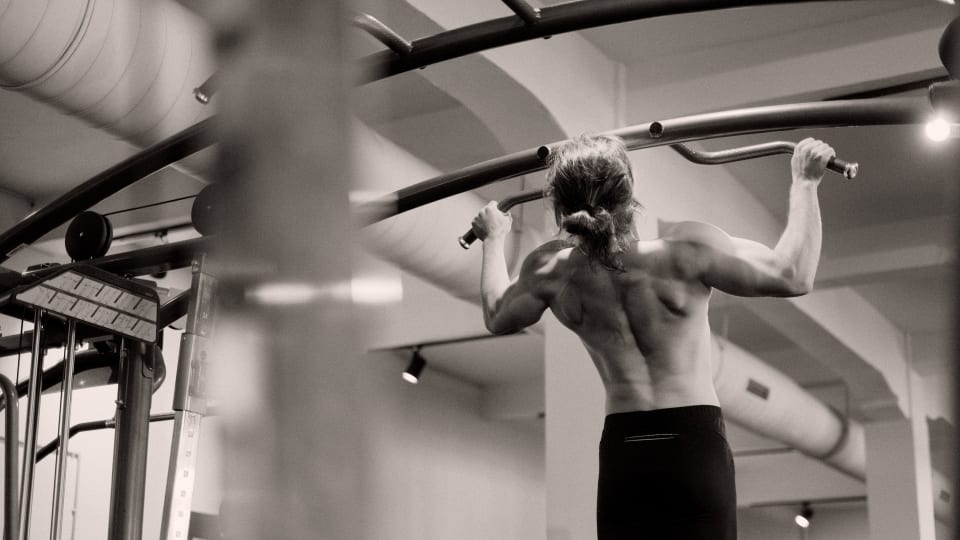
Pull-ups and chin-ups are among the most effective upper-body pulling exercises available. Both target the latissimus dorsi (the broad muscles of the back), biceps, and rear deltoids, with the grip variation shifting the emphasis slightly.
A pull-up uses an overhand grip (palms facing away), which places more demand on the lats and upper back. A chin-up uses an underhand grip (palms facing you), which increases bicep involvement and is often easier to learn initially.
To perform either movement, hang from a bar with arms fully extended, then pull your chest toward the bar by driving your elbows down and back. Lower yourself with control.
Useful progressions for those building toward their first full rep:
- Assisted pull-ups using a resistance band looped around the bar
- Negative pull-ups (jumping to the top position and lowering slowly)
- Lat pulldown machine as a supplementary movement
If you can already perform multiple reps, adding load via a weight belt (such as in streetlifting) increases the challenge.
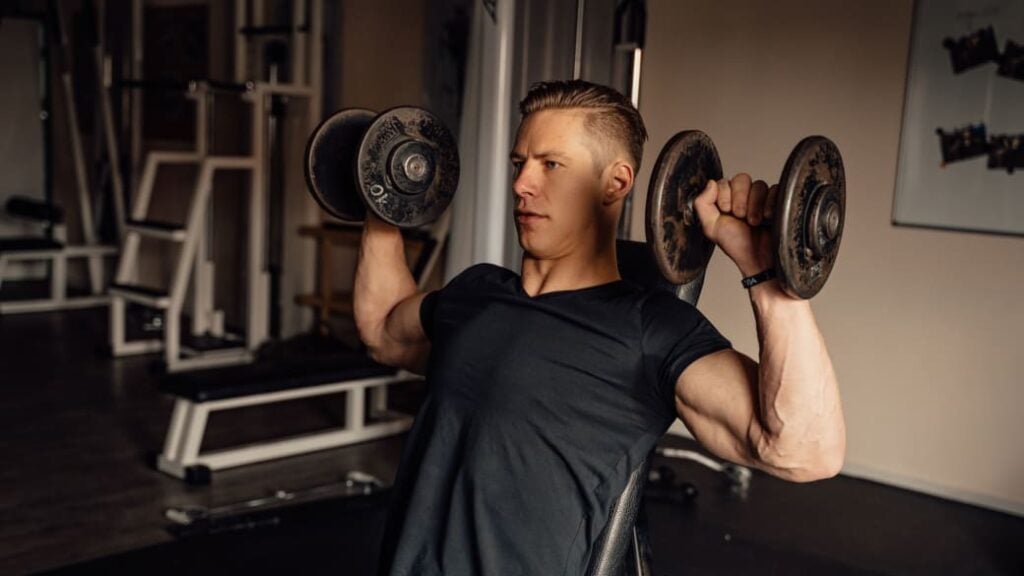
Overhead shoulder press
The overhead press trains the deltoids (particularly the front and lateral heads), triceps, and upper traps. It also requires meaningful core stability to maintain a neutral spine under load.
Stand with feet shoulder-width apart and hold a barbell or dumbbells at shoulder height. Press the weight directly overhead until your arms are fully extended, then lower it back to the starting position with control. Keep your core engaged and your spine in a neautral position as you press.
Form cues:
- Think about pressing the bar in a straight line, not forward
- Squeeze your glutes and brace your core to protect your lower back
- Avoid shrugging your shoulders up toward your ears at the top of the movement
The seated dumbbell press is a useful variation for those still developing core stability, as the bench provides support. The push press (using a slight leg drive to initiate the movement) allows heavier loads and is a useful progression for more experienced lifters.
Barbell bent-over row
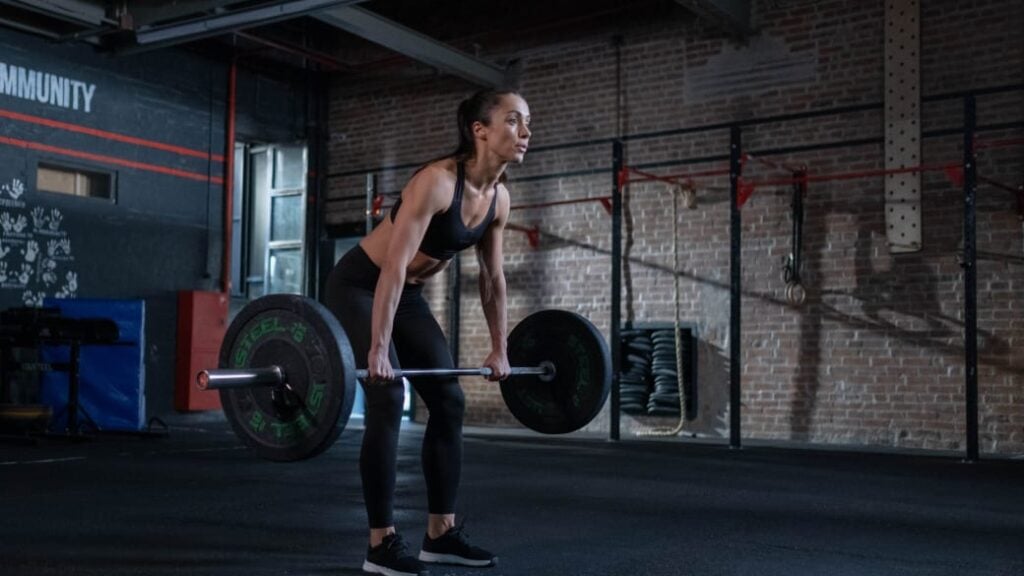
The bent-over row is a foundational pulling movement that targets the upper and mid-back, including the rhomboids, traps, and rear deltoids, along with the biceps and core.
Hinge forward at the hips until the bar is just below your knee height (or just above the knees if needed to maintain posture), keeping your back flat and knees soft. Hold the bar with an overhand grip and pull it toward your stomach, driving your elbows back and squeezing your shoulder blades together at the top. Lower the bar with control.
Key cues:
- Maintain a strong core and flat back throughout; do not let your lower back round under load
- Keep the movement controlled in both directions
- Avoid using momentum to swing the bar up
Dumbbell rows (single-arm or both arms) are a practical alternative when a barbell isn’t available. They allow each side to work independently, which can help address strength imbalances.
Lunge variations
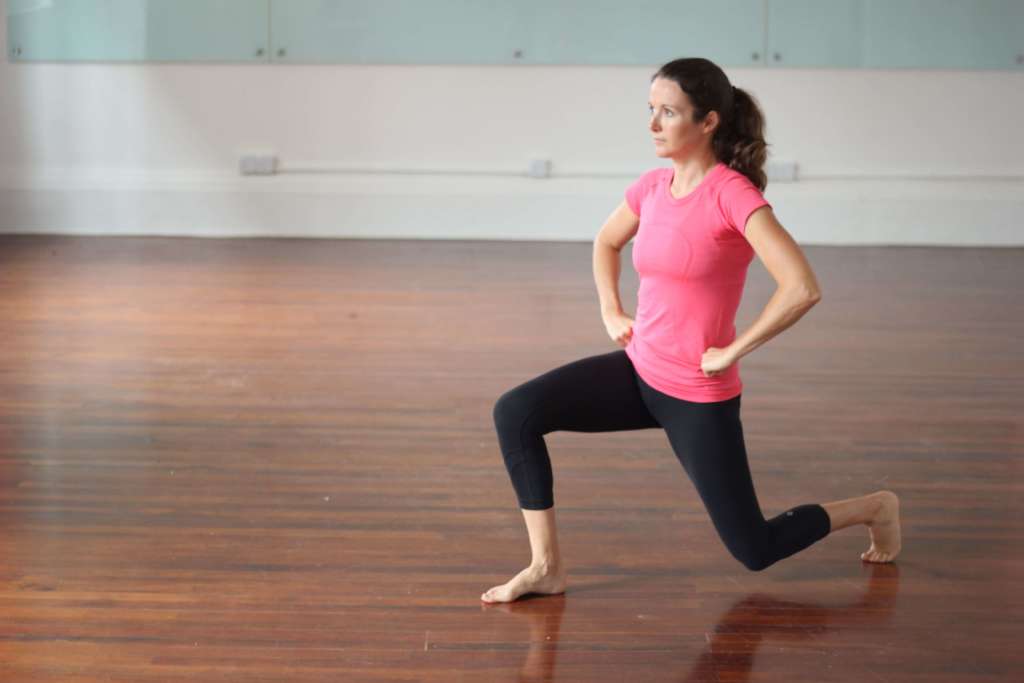
Lunges train the quads, glutes, and hamstrings in split-stance, which also challenges balance and hip stability. Because each leg works somewhat independently, lunges can help identify and address side-to-side strength differences.
The basic forward lunge involves stepping one foot forward, lowering your back knee toward the floor, then returning to the starting position. The reverse lunge (stepping back rather than forward) is often easier on the knees and a good starting point for beginners.
Other useful variations include:
- Walking lunges (continuous forward movement, good for adding volume)
- Lateral lunges (stepping to the side, which trains the inner thigh and hip abductors)
- Bulgarian split squats (rear foot elevated, which increases the challenge significantly)
Lunges can be performed with bodyweight, dumbbells held at the sides, or a barbell across the back. As with all lower-body movements, prioritize control and range of motion before adding load.

Push-up
The push-up is one of the most accessible compound exercises available because you don’t need any equipment. It trains the chest, triceps, and anterior deltoids, while also requiring core stability and shoulder control throughout the movement.
Start in a high plank position with hands slightly wider than shoulder-width and your body in a straight line from head to heels. Lower your chest toward the floor by bending your elbows, keeping them at roughly a 45-degree angle from your body, then press back up.
Form cues:
- Keep your hips level; don’t let them sag or pike up (keep your stomach muscles strong, and squeeze your butt!)
- Maintain a neutral neck position, looking slightly ahead rather than straight down
- Control the lowering phase rather than dropping
Modifications include incline push-ups (hands on a bench or wall, which reduces the load) for those building strength, and decline push-ups (feet elevated) for those looking to increase the challenge. The push-up is a genuinely effective exercise at any fitness level when performed with good form.

More Compound Exercises Worth Adding to Your Routine
Dips
Dips target the triceps, chest, and anterior deltoids, making them a useful upper-body pushing movement that complements rows and pull-ups well.
If you’re new to dips, a chair-assisted version is a practical starting point. Sit on the edge of a sturdy chair, place your hands beside your hips, and lower yourself by bending your elbows before pressing back up. This allows you to control the load using your legs as needed.
As you build strength, you can progress to parallel-bar dips, where your full body weight is supported by your arms. Leaning slightly forward shifts more emphasis to the chest, while staying more upright keeps the focus on the triceps. Adding load via a weight belt is an option for those who find bodyweight dips no longer challenging.

Barbell Thruster
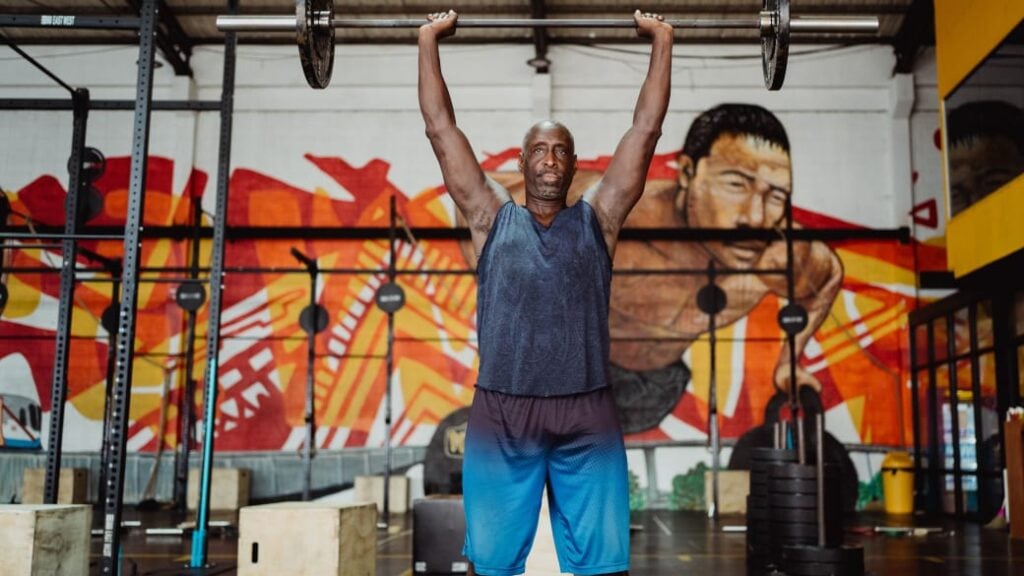
The barbell thruster combines a front squat with an overhead press in one continuous movement. It trains the quads, glutes, shoulders, and triceps, while placing a significant demand on the cardiovascular system.
Start with the bar at shoulder height in a front rack position. Squat down, then use the momentum from standing to drive the bar overhead in one fluid movement. Lower the bar back to the front rack position and repeat.
The thruster is particularly useful in conditioning-focused sessions or circuits. It can also be performed with dumbbells or a kettlebell, making it adaptable to different equipment setups.
Kettlebell Swing
The kettlebell swing is a hip-hinge-based movement that trains the posterior chain, including the glutes, hamstrings, and lower back, along with the core and shoulders. It is also a genuinely effective conditioning tool.
Hold the kettlebell with both hands, hinge at the hips with a flat back, and swing the bell forward by driving your hips through. The power comes from the hip extension, not from pulling with the arms. Let the bell swing back between your legs and repeat.
The swing is worth learning well before adding load. The hip-hinge pattern is the same as in the deadlift, so developing it here carries over to other movements. Those new to kettlebell training may benefit from working with a coach or following a structured tutorial before progressing to heavier weights.
Best Compound Exercises for Beginners
Where to Start as a Beginner
Starting a strength training program can feel overwhelming, especially if you’re unfamiliar with the movements or unsure where to begin. The good news is that you don’t need a complicated program or a fully equipped gym to make meaningful progress.
The most important thing at the start is learning to move well. Choosing a small number of foundational movements and practicing them consistently will take you further than trying to do everything at once. Most beginners see noticeable improvements in strength and coordination relatively quickly, simply because the body adapts readily when it’s exposed to a new stimulus.
If you’re training at home with limited equipment, bodyweight movements are a completely valid starting point. Many of the best compound exercises, including squats, lunges, and push-ups, require no equipment at all.

Beginner-Friendly Movement Patterns to Prioritize
Rather than thinking about specific exercises in isolation, it helps to think in terms of movement patterns. Most compound training can be organized around a handful of fundamental patterns:
- Squat pattern: Goblet squat, bodyweight squat, box squat
- Hip hinge pattern: Romanian deadlift, kettlebell swing, glute bridge
- Push pattern: Push-up, incline push-up, dumbbell press
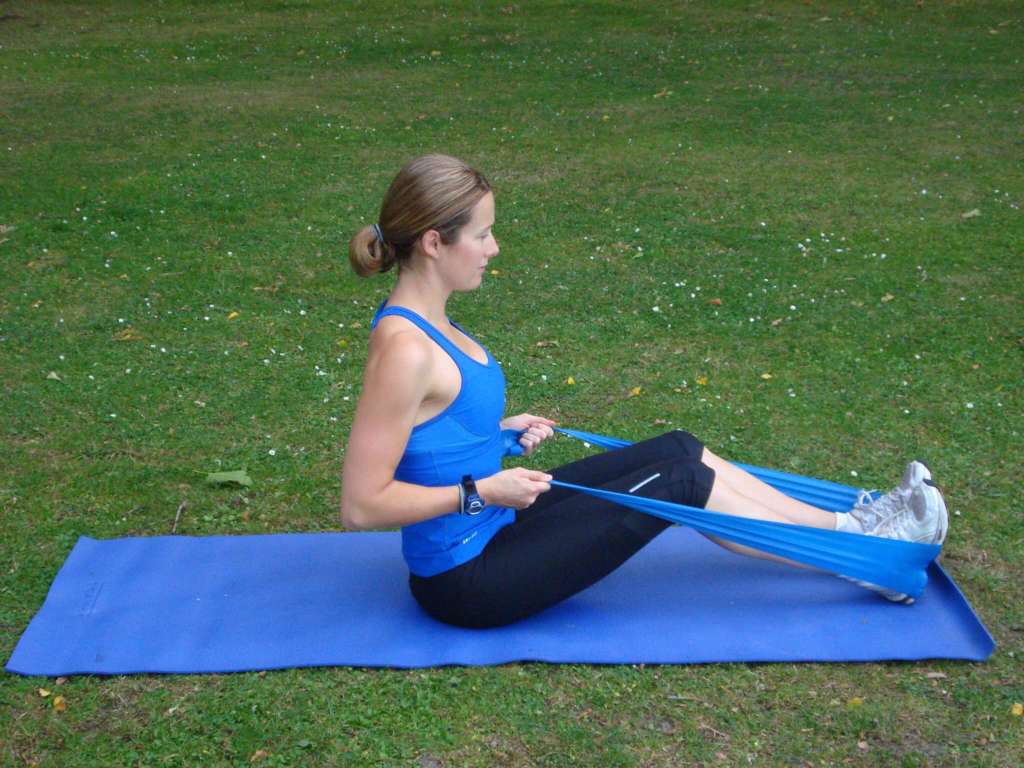
- Pull pattern: Assisted pull-up, lat pulldown, dumbbell row, seated row (machine or resistance bands)
- Lunge or split-stance pattern: Reverse lunge, step-up, split squat
Covering these patterns throughout your training week means you work the whole body without needing to memorize a long list of exercises. As you get more comfortable with each movement, you can add load or progress to more challenging variations.
Tips for Safe Progression
Progression in strength training does not have to mean adding weight. There are several ways to make a movement more challenging over time. Choose one of the following progression variables at a time:
- Increase the range of motion as your mobility improves
- Add more repetitions before increasing the load
- Slow down the lowering phase of the movement to increase time under tension
- Reduce rest between sets as your fitness improves
- Progress to a more challenging variation of the same movement pattern
If something feels painful (not just uncomfortable or effortful), stop and assess before continuing. Discomfort from working muscles is normal; sharp or joint-based pain is a signal to pay attention to. When in doubt, working with a qualified trainer, even for a few sessions, can help you build a solid foundation.
Compound Exercises for Weight Loss
How Compound Training Elevates Calorie Burn
Multi-joint exercises place a higher demand on the body than isolation movements because more muscle tissue is involved. This means your heart rate tends to rise more, your breathing increases, and your body works harder to sustain the effort. Over the course of a session, that adds up to a greater overall energy expenditure.
There is also evidence that resistance training, particularly compound movements, can support metabolic rate over time by helping maintain or develop lean muscle mass. More muscle tissue generally means a higher resting energy requirement, though the extent of this effect varies among individuals.
Worth knowing: training is one piece of the puzzle. Sleep, stress management, and nutrition all influence how your body responds to exercise. Compound training can support weight loss goals, but it works best alongside, not instead of, attention to those other areas.
How to Structure Sessions for Fat Loss
Some people find that keeping sessions moving with minimal rest between exercises suits their goals, but the right approach depends on your fitness level and what you’re working toward. A few general principles that can help:
- Pair compound movements that work different muscle groups (for example, a squat followed by a row) to keep the session moving
- Include movements that challenge large muscle groups, as these tend to demand more energy
- Prioritize consistency over intensity; a moderate session done regularly will outperform an intense session done occasionally
- Allow adequate recovery between sessions so your body can adapt
You don’t need to train every day or push to exhaustion to see results. A few well-structured sessions per week, built around compound movements, can be a meaningful part of a broader approach to managing body composition.
How to add Compound Exercises to Your Training Program
Sample Compound Exercise Workout Plan
The following is one possible way to organize compound training across a week. It’s not a fixed prescription. Adjust it based on your schedule, equipment, and current fitness level.
Option A: Full-body sessions (3 days per week)
Each session includes one lower-body push movement (squat or lunge), one hip-hinge movement (deadlift or Romanian deadlift), one upper-body push movement (bench press or push-up), and one upper-body pull movement (row or pull-up). This covers the major movement patterns without overloading any single session.
Option B: Upper/lower split (4 days per week)
Two sessions focus on lower-body compound movements (squats, deadlifts, lunges), and two focus on upper-body movements (pushing, pressing and pulling). This allows slightly more volume per movement pattern while still allowing recovery.
Both approaches can be effective. The best structure is the one you can maintain consistently over time.

How Often Should You Do Compound Exercises?
Most people benefit from training each major movement pattern at least twice per week. This frequency tends to support both strength development and muscle retention without requiring daily training.
That said, recovery matters as much as frequency. If you are new to training, your body may need more time between sessions to adapt. If you are more experienced, you may be able to handle higher frequency without issue.
A practical starting point for most people is two to four sessions per week, with at least one rest or lighter-activity day between sessions targeting the same muscle groups. From there, you can adjust based on how your body responds.
What Equipment can you use for Compound Exercises?
One of the strengths of compound training is its adaptability to a wide range of equipment setups. You don’t need a fully equipped gym to train effectively.
- Bodyweight only: Squats, lunges, push-ups, pull-ups (if you have a bar), and dips (with parallel bars or a chair)
- Dumbbells: A versatile option for home training that covers most movement patterns, including rows, presses, Romanian deadlifts, and goblet squats
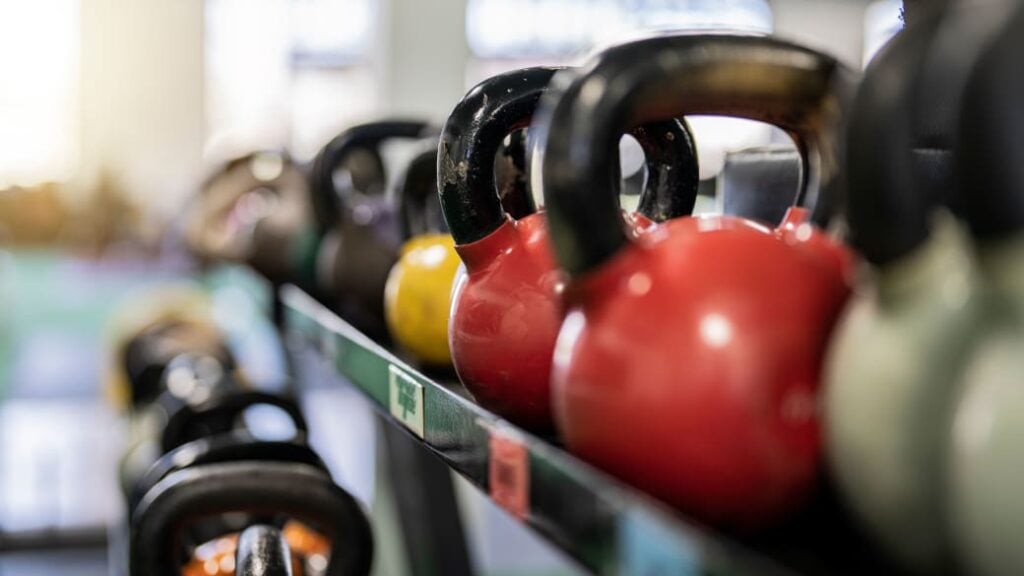
- Kettlebells: Particularly useful for swings, goblet squats, and single-arm pressing and rowing movements
- Barbell and rack: Allows the heaviest loading for squats and bench press, and is the standard setup in most commercial gyms
- Resistance bands: A portable option with merits compared with traditional weights. Exercise bands can assist with pull-ups or add resistance to bodyweight movements
- Pull-up bar: A low-cost addition to a home setup that opens up a range of pulling movements
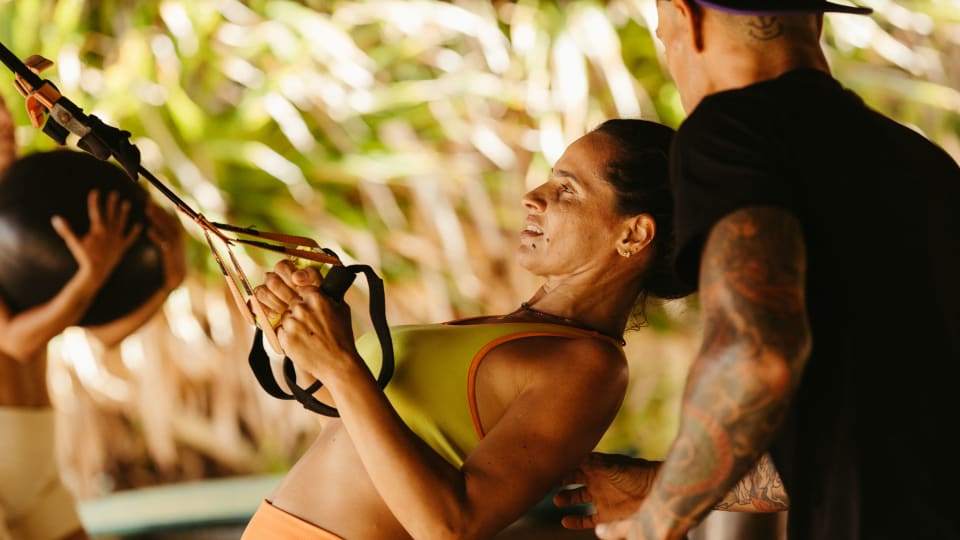
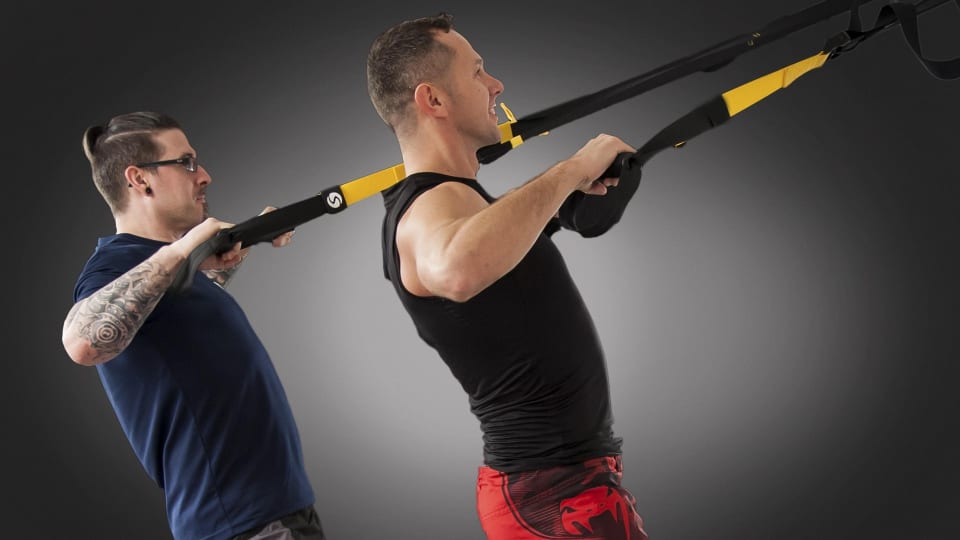
- TRX suspension trainer: A versatile and portable piece of kit, which is excellent for training the core due to its instability. You can use a TRX for compound exercises that work the back, legs, chest, and shoulders.
The equipment you have access to doesn’t determine how well you can train. It simply shapes which variations of each movement pattern you use.
Frequently Asked Questions
Yes, for most people, a program built around compound movements can produce meaningful muscle development without the need for isolation exercises. Because compound lifts recruit large amounts of muscle tissue, they provide a sufficient stimulus for growth when programmed consistently and with appropriate effort.
Isolation exercises can be a useful addition, particularly for targeting specific muscles that may not be fully challenged by compound work alone, but they’re not a requirement. Many experienced lifters have built significant muscle using primarily multi-joint movements.
It depends on your goals and context. For building overall strength and muscle efficiently, compound movements tend to offer more return per unit of time. For addressing specific weaknesses, rehabilitating an area, or adding targeted volume to a muscle group, isolation exercises have genuine value.
Most well-rounded programs include both. Thinking of them as complementary rather than competing is more useful than treating one as superior to the other.
No. While progressive overload (gradually increasing the challenge over time) is an important principle in strength training, that doesn’t mean you need to lift heavy weights to benefit from compound exercises.
Research suggests that muscle can be developed across a range of loads, provided the effort is sufficient. Bodyweight movements, lighter dumbbells, and resistance bands can all produce meaningful results when used consistently and with good form. For newer lifters especially, learning the movement patterns well at a manageable load is far more valuable than rushing to add weight.
Training the same movement patterns every day without adequate recovery is not something most people’s bodies respond well to, particularly when lifting at moderate to high intensity. Muscles need time to repair and adapt between sessions, and that recovery period is part of what drives progress.
That said, some people do train daily by rotating which movement patterns they focus on, ensuring each area gets enough rest between sessions. Whether daily training is appropriate depends on your experience level, the intensity of your sessions, and how well you’re recovering. As covered earlier, two to four sessions per week is a sustainable and effective starting point for most people.
Compound training doesn’t need to be complicated to be effective. Choosing a handful of movements that cover the major patterns- squatting, hinging, pushing, and pulling- and practicing them consistently is enough to build real strength and muscle over time. If you’re new to this style of training, start with movements you can perform with good form and build from there. If you’re already training, consider where the best compound exercises could fill a gap in your current program. What actions might you take next? Leave a question or comment below.
DISCLAIMER: This article/page contains affiliate links. This means that if you make a purchase after clicking on one of these links, then we may receive a small commission – at no extra cost to you. See our full disclosure and Privacy Policy for more information. Thank you for supporting the site and helping make it the most helpful holistic health and fitness online magazine it aims to be!



0 Comments