

At first glance, a jump rope without a rope sounds like a contradiction. When I first saw them, I thought they might be a joke! But once you understand how these tools work, the picture gets more interesting. Read on to learn about cordless jump rope benefits, who they suit best, and where their limits lie.
(This post includes affiliate links for which we may earn a commission at no extra cost to you should you make a purchase. See our full disclosure and Privacy Policy for more information)
Get an automatic 15% off all jump rope products at Crossrope via my partner link.

What Is a Cordless Jump Rope and How Does It Work?
The name alone is enough to make most people pause. A jump rope with no rope? It sounds like a product designed to sell rather than to train. But there’s a real mechanism behind the design, and understanding it helps you decide whether it belongs in your routine.
Defining the Ropeless Jump Rope
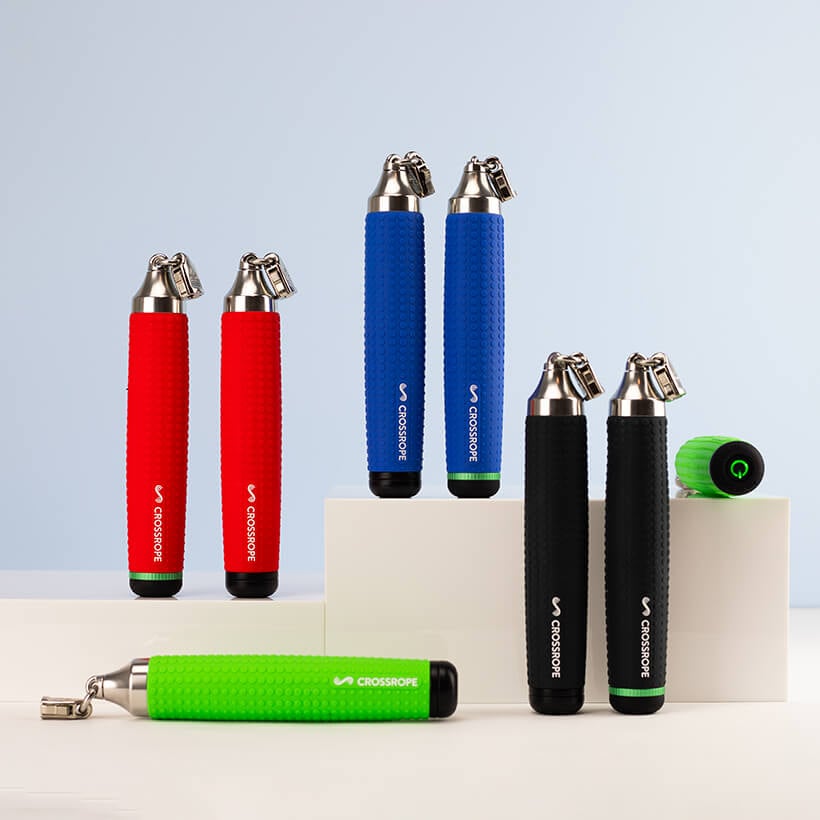
A cordless jump rope, sometimes called a ropeless jump rope, replaces the full-length rope with two short handles, each attached to a small weighted ball or cord stub. You swing the handles in the same circular motion you would use with a traditional rope, mimicking the movement pattern without the rope passing beneath your feet. The physical rope is gone, but the arm and shoulder mechanics remain largely intact.
How the Weighted Handle Mechanism Works
The weighted ends create resistance and momentum as you swing them. This resistance is what makes the movement feel like more than just waving your arms around. The weight travels in a circular arc with each rotation, and your body responds by maintaining rhythm and timing, much like it would with a real rope. Some models (like those available from Crossrope) allow you to adjust the weight, which changes the intensity of the arm movement.
Cordless Jump Rope vs Traditional Jump Rope
The most obvious difference between a ropeless rope and a regular skipping rope is the absence of a physical rope passing under your feet. With a traditional rope, your timing has to be precise enough to clear it on every jump. With a cordless version, there’s nothing to clear, which removes the tripping element entirely. What you gain is accessibility and flow. What you lose is the real-time feedback that a rope provides, along with the skill development that comes from learning to time your jumps accurately.
Key Benefits of Using a Cordless Jump Rope
Removing the rope doesn’t remove the workout. What it does remove are some of the most common reasons people give up on jump rope training early. Ropeless jump rope benefits are largely practical ones, and for many people, that practicality is exactly what makes consistent training possible.
No Tripping Means Continuous Cardio
Tripping over the rope is one of the most frustrating parts of learning to jump rope. It breaks your rhythm, interrupts your heart rate, and can knock your confidence. Without a rope to catch your feet, you can keep moving continuously, which is where the cardiovascular benefit comes from. Sustained effort, even at moderate intensity, is more useful for most fitness goals than repeated short bursts broken up by tangles and restarts.
Lower Skill Barrier and Coordination Benefits
Traditional jump rope takes real practice to get right. The timing between your jump and the rope’s rotation is a skill that develops over weeks, not days. A cordless rope lets you focus on the movement rhythm and arm coordination without that added complexity. For people who are new to this style of training, or who have tried a traditional rope and found it discouraging, the lower entry point can make a meaningful difference to whether they stick with it.
Noise Reduction Advantages
A rope slapping against a hard floor creates a sharp, repetitive sound that carries through walls and ceilings. In an apartment, a shared living space, or a home where others are sleeping, that noise can be a problem. Cordless handles produce almost no impact sound, making early-morning or late-evening sessions far more practical. This is one of the ropeless jump rope benefits that does not get enough attention, but for many people it’s the deciding factor.
Portability and Use Anywhere
The handles are compact and light enough to fit in a bag, a desk drawer, or a carry-on. You don’t need a ceiling high enough to clear a full rope arc, and you don’t need a surface that can handle rope impact. That flexibility opens up training in hotel rooms, small apartments, offices, and outdoor spaces where a traditional rope would be impractical.
Check out Crossrope’s selection of ropeless jump ropes to find the perfect option for your needs.

Health and Fitness Benefits
The movement pattern of jump rope training, whether with a cord or without, engages your cardiovascular system, your muscles, and your coordination simultaneously. The cordless format doesn’t change the fundamental nature of that movement. What it changes is who can access it and where.
Cardiovascular and Heart Health Benefits
Rhythmic, repetitive movement that raises your heart rate over a sustained period is one of the most well-supported approaches to cardiovascular health. Jump rope-style training fits that description. Consistent sessions may support heart health, improve circulation, and enhance aerobic capacity over time. The key word is consistent. Short, regular efforts will produce more meaningful results than occasional intense ones.
Weight Loss and Calorie Burn
Higher-intensity movement burns more energy than lower-intensity movement, and jump rope-style training can be quite demanding depending on your pace and effort level. That said, calorie burn varies considerably among individuals based on body weight, fitness level, and how hard you work. Rather than focusing on a specific number, it’s more useful to think about building a habit of regular movement that you can sustain. That consistency, combined with reasonable attention to what you eat, is what supports weight management over time.
Muscle Tone and Strength Benefits
The jumping action engages your calves, quads, glutes, and core. The arm rotation works your shoulders and forearms. Over time, regular sessions may help improve muscle tone in these areas, particularly for people who are new to this type of training. It’s not a replacement for dedicated strength work, but it does more than just raise your heart rate.
Low Impact Benefits for Joints and Bones
“Low impact” doesn’t mean “no impact.” Bouncing still loads your joints, particularly your ankles and knees. What the cordless format does is allow you to control the intensity more easily, since there is no rope dictating your pace. You can jump lower, slower, or with a softer landing without losing the rhythm of the movement. For people managing joint sensitivity, that control can make the difference between a workout that works for them and one that doesn’t.
Mental and Emotional Health Benefits
Rhythmic physical activity has been associated with improved mood and reduced perceived stress in some people. The repetitive, almost meditative quality of jump rope movement may contribute to that effect. It’s worth noting that these benefits aren’t guaranteed and will vary depending on the individual, their baseline, and other factors in their life. That said, building a consistent movement habit generally supports overall wellbeing in ways that go beyond the physical.
Is a Cordless Jump Rope as Effective as a Traditional Rope?
This is a question worth addressing. The cordless rope is a useful tool, but it’s not a straight swap for a traditional rope. Understanding where the two formats differ helps you use each one appropriately.
Calorie Burn Comparison to Traditional Jump Rope
You’ll still burn calories using a ropeless jump rope. The number you burn will likely be more closely impacted by your intensity (and individual factors, as mentioned above), rather than the type of rope you use. You can increase your intensity with a faster pace or by using heavier weighted handles.
That said, traditional jump roping could have a slight edge in the calorie-burning stakes due to the coordination demands. High-coordination activities require greater muscle recruitment and increased work from your nervous system, thereby increasing energy expenditure.
Overall, any possible difference in calorie expenditure between a cordless and traditional rope is likely to be small. If the cordless format is what allows you to train consistently, that consistency will matter far more than any marginal difference in output.
Do Cordless Jump Ropes Really Work for Fitness Goals?
Yes, with appropriate expectations. The cordless format can support cardiovascular fitness, coordination, and general conditioning. What it doesn’t do is replicate every aspect of traditional jump rope training, particularly the timing skill and the feedback loop that comes from clearing a physical rope. For general fitness goals, it works. For someone training specifically for jump rope performance or boxing conditioning, it’s a supplement rather than a substitute.
Cordless Jump Rope for HIIT Workouts
The cordless format is well-suited to interval-style training. You can increase your pace during work intervals and slow down during rest periods without worrying about tripping or losing your rhythm. The lack of a rope also makes it easier to transition quickly between exercises in a circuit. For HIIT purposes, the practical advantages of the cordless design are an asset.

Who Should Use a Cordless Jump Rope?
Not every tool suits every person, and the cordless rope is no different. But there are some situations where it’s clearly the more practical choice.
Cordless Jump Ropes for Beginners
If you’ve tried a traditional jump rope and spent most of your session untangling it from your feet, a cordless version removes that frustration entirely. Beginners can focus on building rhythm, timing, and cardiovascular endurance without the added challenge of rope coordination. Once those foundations are in place, transitioning to a traditional rope becomes much more manageable.
Cordless Jump Ropes for People with Limited Space
A traditional rope needs enough ceiling height and floor space to swing freely. In a small apartment, a low-ceilinged room, or a shared space, that’s often not available. The cordless format removes those spatial requirements almost completely. You can train in a hallway, a bedroom, or a hotel room without adjusting your environment.
Cordless Jump Ropes for People with Mobility or Physical Limitations
For people managing joint conditions, recovering from injury, or working with a reduced range of movement, the cordless rope offers more control over intensity and impact. You can adjust your jump height, pace, and effort without the rope dictating the rhythm. It’s worth checking with a healthcare provider before starting any new exercise program if you have an existing condition, but the cordless format’s adaptability makes it a more accessible starting point for many people.
How to Get Started: Beginner Workouts and Techniques
Starting simple is almost always the right call. The goal in the early stages is to build a movement habit, not to push your limits. A few consistent sessions each week will do more for your fitness than one exhausting session followed by a week off.
Basic Cordless Jump Rope Techniques
Start with a basic two-foot jump, keeping your knees slightly soft and landing gently through the balls of your feet. Keep your elbows close to your sides and let the handles rotate from your wrists rather than your whole arm. Once that feels comfortable, you can experiment with alternating feet, a slight jog-in-place rhythm, or varying your pace. The mechanics are simple, but good form from the start will reduce fatigue and lower your risk of injury.
Sample Beginner Cordless Jump Rope Workout
A straightforward starting point might look something like this:
- Warm up with light movement for a few minutes before you begin
- Jump at a comfortable pace for 30 to 45 seconds
- Rest or walk in place for 30 to 60 seconds
- Repeat for four to six rounds
- Cool down with some gentle stretching
This is a starting point, not a prescription. Some people will find this easy from day one. Others will need to shorten the work intervals or extend the rest. Let your body guide the adjustments.
Tips for Using a Cordless Jump Rope Effectively
A few things that will make a difference:
- Keep your core lightly engaged throughout to support your posture
- Focus on a steady rhythm rather than speed, especially early on
- Wear supportive footwear when you’re starting out, even indoors
- Train on a surface with a little give if possible, such as a firm rubber mat, jump rope mat, or carpet. Doing so will help reduce joint load. Make sure you avoid soft surfaces, which can make it harder to balance and easier to roll an ankle.
- Short, regular sessions will build your fitness more reliably than infrequent long ones
How to Choose the Right Cordless Jump Rope
With a range of options available across different markets, the most useful approach is to focus on what the product needs to do for you rather than chasing specific features or brands.
Handle Design and Comfort
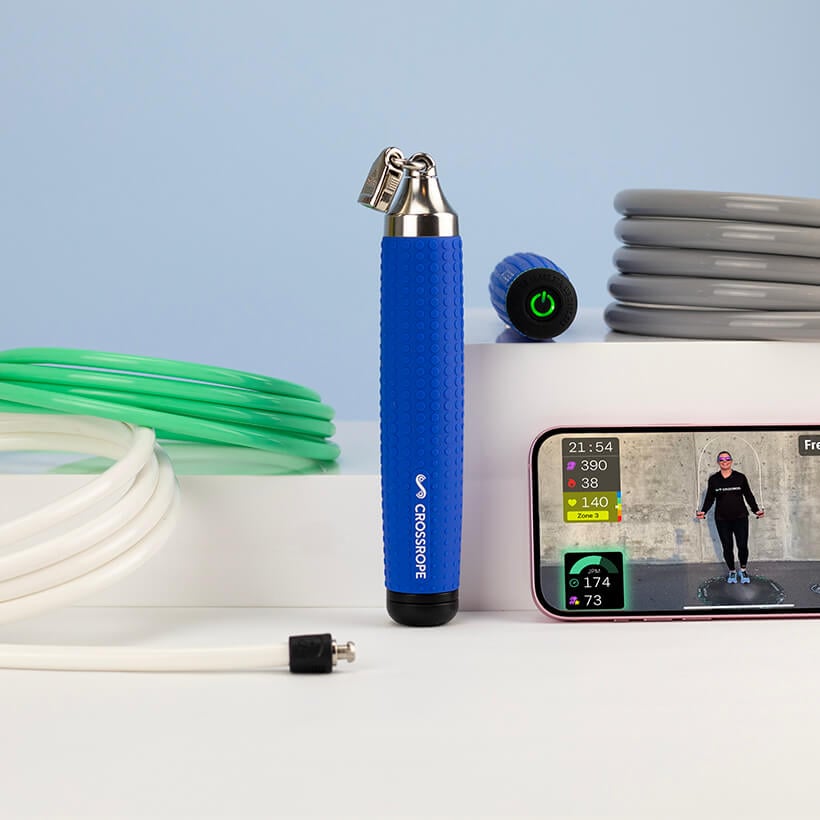
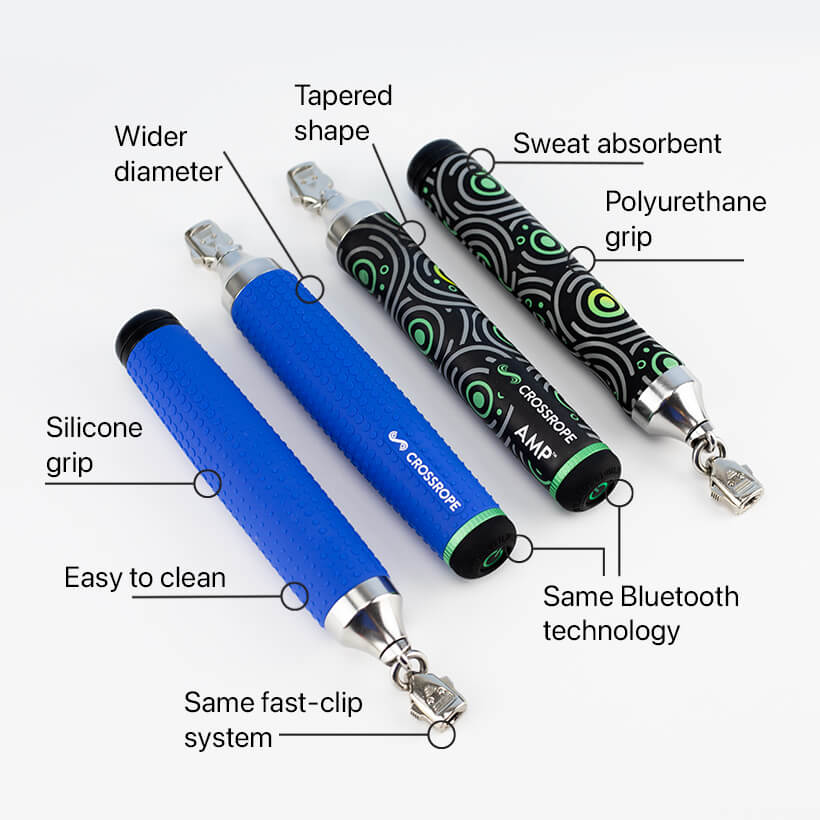
The handles are the only part of the product you will actually hold, so comfort matters. Look for a grip that feels secure without being bulky, and check that the length suits your hand size. Some handles have a textured or rubberized surface that helps with grip during sweaty sessions. If you can test before buying, hold the handles and mimic the rotation motion to see whether they feel balanced and easy to control.
Weight and Resistance Options
Heavier-weighted ends increase the resistance per rotation, making the arm movement more demanding. Lighter options are easier to sustain for longer periods. Neither is universally better. If you are new to this style of training, starting with a lighter option and building from there is a reasonable approach. Some models, such as those from Crossrope, offer interchangeable weights, which gives you more flexibility as your fitness develops.
Material Quality and Build
The connection point between the handle and the weighted end takes a lot of repetitive stress, so it is worth checking that it feels solid rather than flimsy. Handles made from durable materials will hold up better over time, particularly if you plan to use them regularly or travel with them. A product that breaks after a few weeks is not a saving, regardless of the price.
Check out Crossrope’s range of high-quality traditional and cordless jump ropes. They have various weighted options you can easily clip on and off.
Potential Challenges and Limitations of Cordless Jump Ropes
Being clear about any potential limitations of a ropeless jump rope will help you decide whether a traditional or cordless rope is best for you. The most significant limitation of cordless ropes is feedback. With a traditional rope, you know immediately if your timing is off because you trip. The cordless format removes that feedback loop entirely, which means you can develop a rhythm that feels right but doesn’t correspond to clearing a rope. For general fitness, this doesn’t matter much. For anyone training toward traditional jump rope skills, it’s a meaningful gap.
There’s also a question of intensity ceiling. Because there is no rope to clear, the movement can become less demanding over time without you noticing. A traditional rope naturally pushes you to maintain a minimum level of effort. The cordless version requires greater self-awareness to maintain high intensity.
Finally, the absence of a physical rope means you’re not developing the same level of hand-eye coordination and timing that make traditional jump rope training valuable for sports like boxing. If those skills are part of your goal, the cordless format won’t get you there on its own.
None of these are reasons to dismiss a ropeless jump rope. They’re reasons to use it with clear expectations.
Frequently Asked Questions
No exercise can target fat loss in a specific area of the body. Regular cardio activity, including cordless jump rope training, can increase overall energy expenditure, which supports fat loss across the body over time when combined with consistent nutrition habits.
A few minutes of continuous movement is a reasonable starting point for most beginners. From there, you can gradually increase your session length as your fitness and comfort with the movement improve.
Final Thoughts About Cordless Jump Rope Benefits
A cordless jump rope isn’t a gimmick, but it’s also not a replacement for every form of cardio training. Its real value lies in removing the barriers that stop people from training consistently using a traditional rope. These include tripping, noise, space, and skill frustration. If those barriers have kept you from building a jump rope habit, the cordless format is worth trying. Start with short sessions, focus on rhythm over speed, and build from there. The benefits of a cordless jump rope are most accessible to people who use it regularly. Therefore, the best type of rope is the one you will actually pick up. What questions do you have about getting started?
DISCLAIMER: This article/page contains affiliate links. This means that if you make a purchase after clicking on one of these links, then we may receive a small commission – at no extra cost to you. See our full disclosure and Privacy Policy for more information. Thank you for supporting the site and helping make it the most helpful holistic health and fitness online magazine it aims to be!



0 Comments