

Menopause and weight gain often seem to arrive together, even when your routine hasn’t changed much. You eat roughly the same meals and move about as much as you always have. Yet somewhere in your forties or early fifties, your jeans start fitting differently around the waist. For many women, this is the first sign that something has shifted.
It’s easy to assume menopause simply makes you heavier. The research paints a more specific picture. For most women, the bigger change is in body composition. That means how much of your body is fat, how much is muscle, and where your body stores fat.
Understanding that shift can take a lot of the guesswork and self-blame out of this stage of life. It also points to what is most likely to help.
(This post includes affiliate links for which we may earn a commission at no extra cost to you should you make a purchase. See our full disclosure and Privacy Policy for more information)
[Download your free Hormone Harmony ebook here].

Is It Menopause or Just Getting Older?
Menopause arrives alongside several other midlife changes. Work and family demands often peak. Sleep can become patchy. Muscle mass slowly declines with age. So it can be hard to tell what menopause itself is doing.
For years, studies have mostly attributed midlife weight gain to aging rather than menopause. A large analysis from the Study of Women’s Health Across the Nation (SWAN) looked at this question more closely. SWAN has followed a diverse group of American women through midlife for many years.
In this analysis, weight rose steadily in the years before menopause. But it didn’t speed up once the menopause transition began, and it flattened out afterward.
What menopause does change is the makeup of your body and where fat settles. That difference matters, because it changes what you should pay attention to.
What the Scales Can’t Show You
The same SWAN analysis used body scans to track fat and lean mass separately. The researchers examined how each changed relative to a woman’s final menstrual period.
Before the transition, both fat and lean mass rose slowly. Once the transition began, the rate of fat gain doubled and lean mass started to decline. These changes continued until about two years after the final period. After that, they leveled off.
This explains why weight didn’t change pace. Because fat was rising while lean mass was falling, the two changes largely balanced each other out on the scales.
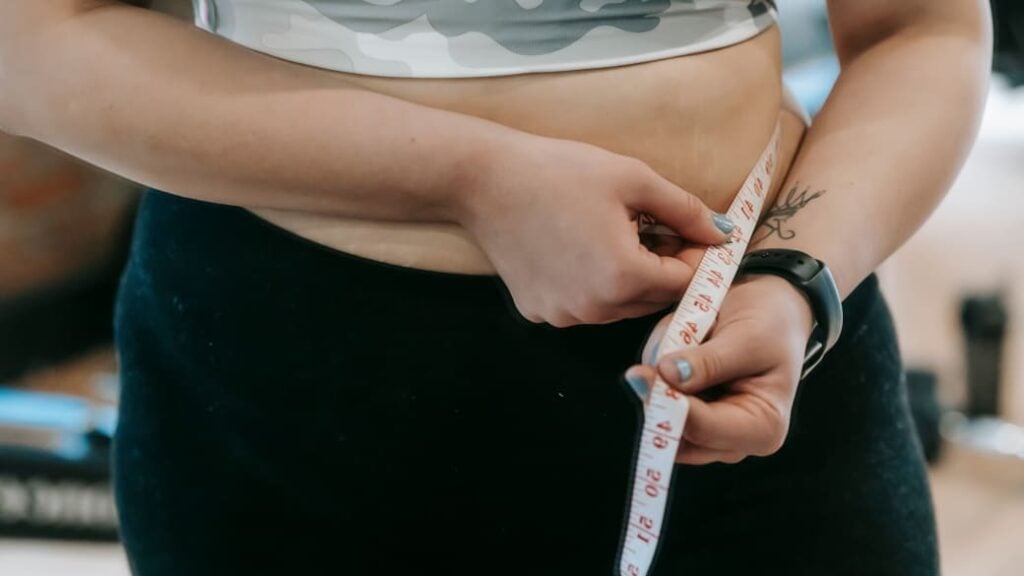
This is one of the most misunderstood parts of menopause and weight gain. A woman can weigh about the same as she did five years ago and still feel softer through the middle. The number isn’t wrong. It just can’t see what’s happening underneath. Your waist measurement, how your clothes fit, and how strong you feel can give you a much clearer picture. They also help you judge your progress more fairly. A tape measure once a month can tell you more during this stage than a daily weigh-in.

Why Fat Settles Around the Middle
Where fat is stored is a big part of the menopause and weight gain picture. A four-year study of women who were premenopausal at the start measured abdominal fat each year using CT scans. All of the women gained subcutaneous fat over time. This is the layer that sits just under the skin (the fat you can pinch).
But only the women who became postmenopausal during the study had a significant increase in visceral fat. This is the deeper fat stored around the abdominal organs. The postmenopausal group also had a significant drop in estradiol, the main form of estrogen during the reproductive years.
The same study found some quieter changes too. In women who went through menopause, fat oxidation dropped by 32%. Fat oxidation is how much fat your body burns for fuel. It didn’t change in the women who were still premenopausal.
In a smaller group of 34 women, energy use during sleep was also measured. It fell by 7.9% in the menopause group, compared with 5.3% in the premenopausal group. These are real physical shifts. They help explain why an approach that worked at 35 may not have the same effect at 50.
[Download your free Hormone Harmony ebook here].
The Quiet Drop in Daily Movement
The study picked up one more pattern. Physical activity dropped significantly about two years before menopause and stayed low afterward.
It wasn’t a story of women eating more, either. Their energy intake was actually higher three to four years before menopause than it was at menopause onset. So they were eating less, yet their body fat still rose. According to the researchers, lower energy use and fat burning at menopause can predispose women to obesity if lifestyle changes aren’t made.
Movement can slip during these years for all sorts of reasons. Broken sleep, fatigue, sore joints, and busy schedules can all play a part. Often it happens so slowly that you don’t notice. A few fewer walks here, a bit more sitting there. Over months and years, it adds up. Tracking your daily steps for a week or two can show you whether this has quietly happened to you. The good news is that daily movement is one of the few factors here that is largely in your hands.

Exercise Can Help You Push Back
This is where you have real influence. A 2023 meta-analysis of 101 randomised controlled trials pooled results from 5,697 postmenopausal women. Exercise training increased muscle mass and fat-free mass. It also reduced fat mass, body fat percentage, waist circumference, and visceral fat. These benefits appeared regardless of age and program length.
Exercise type made a difference. Aerobic and combined training had greater benefits for fat mass. Resistance and combined training had greater benefits for muscle. The researchers suggested that a mix of both may be a sensible way to improve body composition after menopause.
For women worried about menopause and weight gain, this is useful to know. Exercise helps shift the balance of fat and muscle, even when the scales barely move.
In practice, a balanced week could include the following.
- Two or three strength sessions, using weights, resistance bands or your own bodyweight
- Brisk walking, cycling, swimming or dancing on most other days
- Short bursts of movement through the day, especially if you sit for long periods
Strength training can feel intimidating if you’ve never done it. It doesn’t need to be. Starting light and building up gradually is enough. Even a short routine done consistently can help protect the muscle that menopause makes harder to keep.
Other Habits That Support You
When it comes to menopause and weight gain, exercise works best alongside a few other foundations. Including protein at each meal can help support the muscle you’re working to maintain. Sleep matters too, especially if night sweats keep waking you. Managing stress also affects how you eat, how you move, and how well you recover.
None of these habits has to be perfect. Small, steady changes are easier to keep up, and they build on the work your training is already doing.
If you’re considering hormone therapy as part of your approach, talk it through with your doctor. The right choice depends on your own symptoms and health history.
A Different Way to Think About Menopause and Weight Gain
People often talk about this stage of life (perimenopause and menopause) as if the outcome is fixed. The research suggests something more hopeful. The changes are real, but they don’t go on forever. In the SWAN data, fat gain and lean mass loss leveled off about two years after the final period.
That gives you a clearer target. Instead of chasing a number on the scales, you can focus on protecting your muscle and moving more often. Then watch how your waist and strength change over time. Those shifts won’t happen overnight. But they give your body steady support through a stage of life that asks a lot of it.
[Get your free menopause meal plan and recipe book here].
DISCLAIMER: This article/page contains affiliate links. This means that if you make a purchase after clicking on one of these links, then we may receive a small commission – at no extra cost to you. See our full disclosure and Privacy Policy for more information. Thank you for supporting the site and helping make it the most helpful holistic health and fitness online magazine it aims to be!



0 Comments