

Your core does a lot more than hold a plank or crunch toward your knees. It stabilizes your spine, transfers force between your upper and lower body, and keeps you upright through every movement you make. If you want to build that kind of functional strength, read on for the best TRX core exercises to add to your training.
(This post includes affiliate links for which we may earn a commission at no extra cost to you should you make a purchase. See our full disclosure and Privacy Policy for more information)
Why TRX Training Builds a Stronger Core Than Traditional Exercises
The Problem with Crunches and Floor-Based Ab Work
Floor-based ab exercises are not without value, but they do have a ceiling. Crunches, sit-ups, and leg raises on a mat train your core in a relatively controlled environment where your body is supported. That is useful for learning basic muscle activation, but it doesn’t reflect how your core works in real life.
In everyday movement, your core is rarely working in isolation. It is bracing, rotating, and stabilizing while the rest of your body is doing something else entirely. Floor exercises don’t replicate that demand particularly well.
There’s also the spinal loading question. Repeated spinal flexion under load, which is what a crunch essentially is, may not be the most appropriate choice for everyone, particularly those managing lower back discomfort. This doesn’t mean crunches are harmful for all people, but it’s worth considering whether they are the most efficient use of your training time.
How Suspension Training Creates Full-Body Core Demand
When you attach your feet or hands to a TRX Suspension Trainer and move, your core has no choice but to engage. The instability created by the suspension point means your body is constantly making small adjustments to maintain position. That’s not a bonus feature of TRX suspension training. It’s the whole point.
Take a high plank with your feet in the foot cradles. Your abdominal muscles are working to prevent your hips from dropping. Your glutes are firing to keep your legs in line. Your shoulders are stabilizing the upper body. None of those muscles are working in isolation, and none of them get a break while you hold the position.
This is what makes suspension training different from floor-based work. The instability doesn’t just make exercises harder. It changes the nature of the demand entirely, recruiting more of the core system at once and requiring it to work the way it does in real movement.
What the Research Says About Instability-Based Core Training
The research on instability training is worth understanding without overstating. Research suggests that unstable conditions may increase activation of deep stabilizing muscles including the transverse abdominis and multifidus, though findings vary across studies and populations. That is a meaningful finding for anyone interested in building functional core strength rather than just surface-level muscle.
That said, instability training is not categorically superior to all other forms of core work. The evidence suggests it’s particularly useful for developing neuromuscular control and deep core stability, which complements rather than replaces strength-focused training. For most people, a mix of approaches usually produces better results than any single method alone.
Some research suggests that suspension training exercises may create greater core muscle demands than their floor-based equivalents, though results can vary depending on the exercise and the person. That’s a reasonable basis for including them in your training, especially if your goal is functional strength and stability.
The Core Muscles TRX Training Actually Works
Rectus Abdominis (Surface Abs – the 6-Pack)
The rectus abdominis runs vertically along the front of your abdomen and is the muscle most people picture when they think about core training. Its primary job is spinal flexion, which is the movement that happens when you curl your torso toward your hips.
During TRX exercises, the rectus abdominis works hard to maintain a neutral spine and resist extension, particularly in movements like the pike and fallout. It’s not always the primary mover, but it never completely switches off either. In sport and daily life, this muscle contributes to posture, breathing mechanics, and the transfer of force between your upper and lower body.
Internal and External Obliques
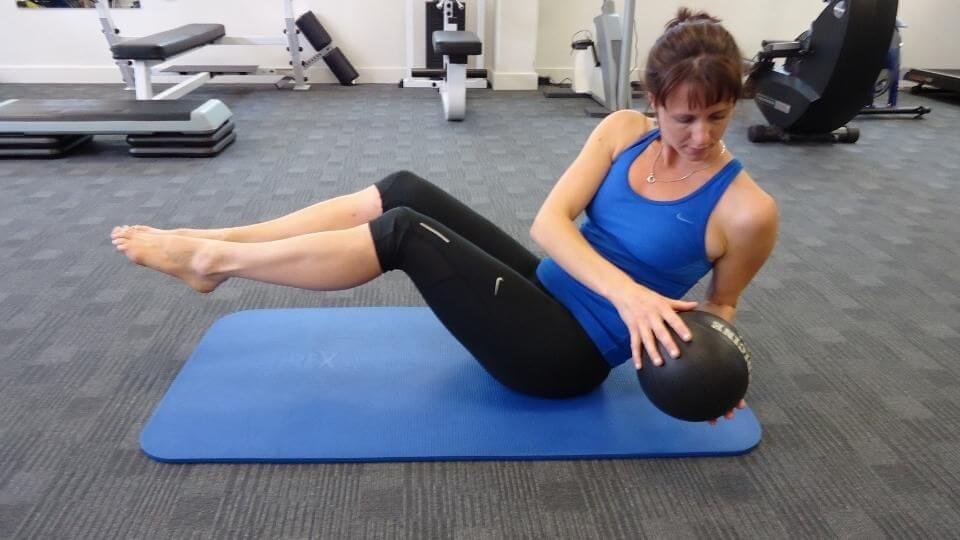
Your obliques run diagonally along the sides of your torso and are responsible for rotation, lateral flexion, and helping to stabilize the spine under load. The external obliques sit closer to the surface, while the internal obliques lie beneath them, running in the opposite direction.
These muscles are heavily involved in any TRX movement that requires you to resist rotation or move through a rotational pattern. Side planks, oblique crunches, and resisted rotation exercises all place significant demand on the oblique system. For athletes, strong obliques are closely linked to power generation in throwing, swinging, and change-of-direction movements. For desk workers, they play a key role in maintaining upright posture and reducing the strain that comes from prolonged sitting.
Deep Core: Transverse Abdominis and Multifidus
These are the muscles that do not show up in a mirror but matter enormously for how your spine functions. The transverse abdominis wraps around your trunk like a corset and creates intra-abdominal pressure that protects the spine during load. The multifidus runs along the vertebrae and provides segmental stability, meaning it helps each individual vertebral joint stay in the right position.
Both muscles are activated during virtually every TRX exercise, particularly those that require you to maintain a stable position against an unstable load. Reduced activation of deep stabilizing muscles has been associated with lower back pain in some research, and suspension training can be explored as part of movement-based approaches to support spinal health. Strengthening them does not require heavy loads. It requires the kind of sustained, low-level activation that instability training produces naturally.
Supporting Muscles: Erector Spinae, Glutes, and Hip Flexors
The core doesn’t end at the abdominals. The erector spinae runs along the back of the spine and works to maintain an upright posture and resist forward flexion. The glutes stabilize the pelvis and contribute to almost every lower body movement. The hip flexors connect the spine and femur and are active whenever you lift your legs or maintain a plank position.
In TRX training, these muscles are frequently recruited as part of the broader stabilizing system. A suspended plank, for example, requires the glutes to fire continuously to keep the hips level. A bodysaw demands that the erector spinae resist the forward pull of the straps. Understanding these supporting roles helps explain why TRX exercises often feel more demanding than they look.
Foundational TRX Core Exercises
TRX Suspended Plank
The suspended plank is the foundation of most TRX core work. It looks simple, but the instability created by the foot cradles makes it significantly more demanding than a floor plank.
Setup: Straps at mid-calf length. Place your feet in the foot cradles and come into a high plank with your hands directly under your shoulders.
Movement: Hold the position for the desired duration, maintaining a straight line from head to heels.
Form cues:
- Press the floor away with your hands to engage the shoulders
- Squeeze your glutes to prevent your hips from dropping
- Keep your gaze slightly forward of your hands to maintain a neutral neck
Progression: Add small movements such as shoulder taps or hip dips to increase the stability demand. Regression: Reduce the duration. This is a good starting point for beginners new to TRX suspension training, as it builds the body awareness needed for more complex movements.
TRX Leg Raise
The TRX Leg Raise targets the lower rectus abdominis and hip flexors while requiring the upper body and deep core to stabilize against the movement.
Setup: Lie down on your back on the floor and hold the handles with your arms extended in front of you, on an angle. The straps should be taut, with your hands above the level of your waist, and your head lifted off the floor.
Movement: Keeping your legs straight, raise them toward a vertical position, then lower with control, stopping before your heels reach the floor. Avoid swinging or using momentum to lift.
Form cues:
- Keep a slight bend in the knees if hamstring flexibility is limited
- Brace your core throughout each rep
- Control the lowering phase as much as the lift
Progression: Add a hip lift at the top of the movement. Regression: Decrease the range of motion (don’t lower the legs all the way). Or, bend the knees to reduce the lever length, making the movement more manageable.
TRX Pike
The TRX Pike is one of the most effective foundational movements for building core strength through the full anterior chain. It targets the rectus abdominis, hip flexors, and shoulders, while also demanding significant stability from the deep core.
Setup: Adjust the TRX Suspension Trainer to mid-calf length. Place your feet in the foot cradles and walk your hands out into a high plank position on an exercise mat. Your body should form a straight line from head to heels.
Movement: From the plank, drive your hips upward toward the ceiling, keeping your legs as straight as possible. Your body will form an inverted V shape at the top, with shoulders and hips above your wrists (at the full range). Lower back down with control to return to the plank.
Form cues:
- Keep your core braced throughout, not just at the top of the movement
- Avoid letting your lower back arch as you return to the plank
- Move slowly and with intention rather than using momentum
Progression: Add a pause at the top of the pike and slow the movement down. Regression: Reduce the range of motion, or do a knee tuck instead. Focus on maintaining a solid plank position before adding the pike movement. Beginners can start by simply holding the suspended plank, then progressing to a knee tuck, before attempting the full pike.
TRX Bodysaw
The TRX Body Saw is a plank variation that adds a dynamic element, making it considerably more demanding than a static hold.
Setup: Adjust the straps to mid-calf length. Place your feet in the foot cradles and come into a forearm plank on the mat, with your elbows directly under your shoulders.
Movement: From the plank, move your body forward, decreasing the angle at your elbows. Then pull back to the starting position, and continue back as far as you can (increasing the elbow angle) while maintaining a strong, straight body. The movement is small and controlled, not a full range swing.
Form cues:
- Keep your hips level throughout, resisting any rotation or sagging
- Breathe steadily and avoid holding your breath
- The movement comes from the shoulders and core, not the lower back
Progression: Increase the range of the forward and backward movement. Regression: Reduce the range of motion significantly and focus on maintaining a stable plank before adding any movement.
TRX Oblique and Rotational Core Exercises
Rotational and lateral core strength often gets less attention than front-facing ab work, but it matters enormously for how your body actually moves. Whether you’re reaching across your body to lift something, changing direction on a sports field, or simply sitting at a desk for hours, your obliques and rotational stabilizers are doing constant work. Training them directly reduces injury risk and improves the quality of movement across almost every physical activity.
TRX Side Plank
The TRX Side Plank challenges the lateral core, particularly the obliques and quadratus lumborum, while also demanding stability from the shoulder and hip.
Setup: Straps at mid-calf length. Place both feet in the foot cradles and come into a side plank position, with one hand on the mat directly under your shoulder and your body in a straight lateral line. Alternatively, you can do the side plank on your forearm, instead of your hand.
Movement: Hold the position for the desired duration, then switch sides.
Form cues:
- Stack your feet or stagger them slightly for balance
- Keep your hips lifted and avoid letting them drop toward the mat
- Reach your top arm toward the ceiling to open the chest
Progression: Add a hip dip by lowering and raising the hips during the hold. Regression: Perform the side plank with your feet on the floor rather than in the cradles, then progress to the suspended version as your lateral stability improves.
TRX Oblique Crunches
This movement combines the instability of the suspended plank with a rotational crunch, targeting the obliques and hip flexors.
Setup: Straps at mid-calf length. Come into a high plank with your feet in the foot cradles.
Movement: Draw both knees toward one elbow in a controlled rotation, then extend back to the plank. Alternate sides.
Form cues:
- Avoid letting your hips rise too high as you rotate
- Keep the movement deliberate rather than fast
- Maintain shoulder stability throughout
Progression: Increase the speed of the movement while maintaining control. Regression: Reduce the range of rotation and focus on keeping the plank stable before adding the crunch.
TRX Kneeling Oblique Rollout
This is one of the more demanding movements in the oblique category, and it’s worth being clear about that before you attempt it. The TRX Kneeling Oblique Rollout requires a solid base of core stability and shoulder strength. Attempting it without that foundation can compromise form and increase injury risk.
Setup: Kneel on the mat with the TRX towards one side of your body. Hold the handles with both hands, arms extended and down in front of you. Your waist is sideways to the TRX, but you rotate your shoulders so your upper body faces towards the TRX.
Movement: Keeping your core braced, allow your arms to travel diagonally to one side as you lower toward the floor, then pull back to the starting position using your obliques. Because you’re moving to the side, your hands won’t stay exactly in line with each other, and one knee will naturally lift off the floor slightly as you lower. Repeat on the other side.
Form cues:
- The movement should feel like a controlled reach, not a collapse
- Breathe in as you lower forward and breathe out as you return to the start
Making it more accessible:
- Shorten the strap length to reduce the range of motion
- Move your body under the anchor point to start the exercise
- Start with a very small diagonal reach and build gradually
- Ensure you are comfortable with the TRX Side Plank and Oblique Crunches before attempting this movement
Progression: Move your body further from the anchor point and increase the range of the diagonal reach as your strength allows. There’s no single correct version of this exercise. Work within a range that lets you maintain form throughout.
TRX Resisted Rotation
The TRX Resisted Rotation trains the obliques and deep core to resist and control rotational forces, which is directly relevant to sport and everyday movement.
Setup: Stand sideways to the anchor point and hold both handles in single-handle mode, with the hand closest to the TRX (the working side) on the bottom, and the other hand placed over the top. Bend your arms and draw your hands into your chest. Step away from the anchor to create tension in the straps. Step the leg closest to the anchor point forward, and step the other back, so you’re in a split stance. Then extend your arms straight out in front of you, ready to start the movement.
Movement: Keeping your arms straight, rotate your torso 90 degrees, so you end up facing the anchor point. Your body will be leaning away from the TRX, and your legs remain in a split stance. Then pull both handles to your chest and rotate back to the start position.
Form cues:
- Keep your hips square and shoulders back and down
- Initiate the movement from your core, not your arms
- Ensure your head and shoulders move at the same speed as your upper body
Progression: Keep your arms extended throughout the movement, instead of going through the bent phase. Alternatively, step closer to the anchor point, which will increase the angle of your body. Regression: Step further from the anchor to reduce the load. This exercise is accessible across a range of fitness levels with simple position adjustments.
Advanced TRX Core Movements
Building a solid foundation with the earlier exercises is what makes this section worth attempting. The movements here are more demanding not because they’re reserved for elite athletes, but because they require a higher level of coordination, stability, and strength working together. Progression is individual. Some people will reach these movements quickly; others will spend months building toward them. Neither path is wrong.
TRX Fallout and Ab Rollout
The TRX Fallout is a high-demand anterior core exercise, with EMG research showing it produces substantial activation of the rectus abdominis compared with many other core movements. It’s similar in principle to an ab wheel rollout but with the added instability of the straps.
Setup: Begin in a standing position, holding a TRX strap in each hand in front of you, knuckles facing forward. Start with the straps taut and your arms extended down and slightly forward. Step back so your whole body is leaning slightly forward to begin.
Movement: Keeping your body in a straight line, allow your arms to travel overhead as you lower toward the floor. Your heels will naturally lift off the floor as you move forward. Pull back to the starting position using your arms, core, and lats.
What makes it advanced: The long lever created by the extended arms places enormous demand on the anterior core. Any loss of tension through the midsection results in a lower back arch, which signals the movement has exceeded your current capacity.
Form cues:
- Keep your glutes engaged throughout
- Don’t allow your lower back to arch at any point
- Move slowly, especially on the way down
Progression: Step back a bit further to make it harder.
Regression: Reduce the range of motion by only allowing the arms to travel partway forward before returning. You can also step forward a bit to make it easier, or perform it as a kneeling exercise instead of standing.
TRX Atomic Push-Ups
The TRX Atomic Push-Up combines a push-up with a knee tuck, demanding strength and stability from the chest, shoulders, triceps, and core simultaneously.
Setup: Straps at mid-calf length. Come into a high plank with your feet in the foot cradles.
Movement: Perform a push-up, then at the top of the movement, draw both knees toward your chest in a controlled tuck. Extend back to the plank and repeat.
What makes it advanced: Combining two demanding movements requires the core to stabilize through a full push-up and then immediately shift into a flexion pattern. The instability of the foot cradles amplifies both demands.
Form cues:
- Keep your hips level during the push-up phase
- Control the extension back to the plank
Progression: Change the knee tuck to a pike.
Regression: Separate the movements. Practice the suspended plank and push-up before adding the knee tuck.
TRX Around the World
There are several versions of the TRX Around the World – here’s one of them! It’s as much a shoulder stability exercise as a core one.
Setup: Face the anchor point and hold the handles with your arms extended in front of you below your rib height, palms up. Lean back to create tension.
Movement: With your body in a straight line, extend your arms out to the side and up over your head in a circular movement, rotating your hands as you do, so that your palms face forward when they’re overhead. Your body will be in a more upright position when your arms are stretched overhead. Then lower back to the start position with control, tracing the same movement pattern, in the opposite direction.
What makes it advanced: The changing angle of pull throughout the movement means the core must constantly adapt its stabilizing strategy. There’s no fixed position to brace against.
Form cues:
- Keep your body rigid throughout the full circle
- Move slowly and with control
- Avoid letting your hips sag as your arms move overhead
Regression: Reduce the size of the circle and build range gradually.
TRX Hamstring Runners
TRX Hamstring Runners train the posterior chain and core together, mimicking the single-leg loading pattern of running. You’ll really feel this one in the hammys!
Setup: Lie on your back with your heels in the foot cradles directly under the anchor, and your hips lifted into a bridge position.
Movement: From the bridge, drive one knee toward your chest while keeping the other leg extended. Alternate in a running-style pattern.
What makes it advanced: Maintaining hip height while alternating legs requires significant hamstring strength and core control. The instability of the cradles adds an additional lateral stability demand.
Form cues:
- Keep your hips level throughout, not allowing them to drop on the driving side
- Brace your core before you begin
- Move with rhythm but not at the expense of control
Progression: Extend the arms straight up, perpendicular to the ground, to decrease stability. Speed up the movement to become more like a running motion, with legs alternating in a continuous movement.
Regression: Keep the arms extended down on the floor, giving you a stronger base of support. Clearly perform one knee tuck at a time, extending your leg before switching sides.
TRX Mountain Climbers
TRX Mountain Climbers are a familiar movement made significantly harder by the instability of the foot cradles.
Setup: Straps at mid-calf length. Come into a high plank with your feet in the foot cradles.
Movement: Drive one knee toward your chest, then return and alternate. The pace can vary depending on your goal and level.
What makes it advanced: The suspended position means the core must work harder to prevent hip rotation and maintain plank integrity with each knee drive. The instability amplifies the demand compared to the floor version.
Form cues:
- Keep your hips level and avoid letting them rise with each knee drive
- Maintain a strong plank through the shoulders
- Breathe rhythmically rather than holding your breath
Regression: Slow the pace significantly and focus on maintaining plank position before increasing speed.
TRX Core Workout Routine
How to Structure a TRX Core Session
A TRX core session doesn’t need to be long to be effective. The instability element means your muscles are working harder than they might in a comparable floor-based session, so quality of movement matters more than volume.
A practical structure might look like this:
- A brief warm-up to prepare the joints and activate the core (five to ten minutes)
- Two to four foundational or targeted exercises chosen based on your current level
- One or two more demanding movements if your capacity allows
- A short cool-down with mobility work for the hips and spine
The TRX suspension trainer system is genuinely portable, which means this structure works whether you’re in a gym, at home with a door anchor, or outdoors with a suitable suspension point.
Beginner, Intermediate, and Advanced Progressions
One of the strengths of TRX training is that most exercises can be modified to suit different starting points. Progression isn’t a straight line, and what feels advanced one week may feel manageable a few weeks later as your body adapts.
A rough guide by level:
- Beginner: Focus on the suspended plank and TRX leg raise with bent knees. Build body awareness and core tension before adding movement.
- Intermediate: Introduce TRX Pikes, the TRX Body Saw, oblique crunches, the TRX side plank, and resisted rotation. Work on controlling the full range of each movement before increasing difficulty.
- Advanced: Add the fallout, atomic push-ups, around the world, hamstring runners, and mountain climbers. Prioritize form over pace or volume.
These groupings are a guide, not a gate. If a movement from the intermediate category feels accessible on your first session, use it. If an advanced movement is beyond your current capacity, that’s useful information, not a setback.
Sets, Reps, and Rest Recommendations
There’s no single rep count or rest period that works for everyone. Your starting point, goals, and recovery capacity all influence what is appropriate for you.
Some general principles to work from:
- For stability and endurance, longer holds and higher rep ranges with shorter rest periods tend to work well
- For strength development, fewer reps with greater resistance or range of motion and longer rest periods are more appropriate
- For beginners, prioritizing form over volume is always the right call
- Rest long enough between sets to maintain quality movement, which will vary depending on the exercise and your current fitness level
If you’re new to TRX core exercises, starting with two to three exercises per session and building from there is a reasonable approach. More experienced trainees may choose to include a greater variety of movements and higher overall volume, depending on their goals and recovery capacity. Let how your body responds guide the adjustments.
Who Benefits Most from TRX Core Training
Desk Workers and Sedentary Lifestyle Recovery
Prolonged sitting tends to weaken the deep core stabilizers and tighten the hip flexors, which can contribute to poor posture and lower back discomfort over time. TRX core training addresses both of these issues without requiring heavy loads or complex equipment.
The deep core activation that comes with suspension training, particularly through movements like the suspended plank and bodysaw, helps rebuild the stabilizing function that sitting tends to switch off. Adding a short TRX core session a couple of times a week can support better posture and movement quality over time, particularly when combined with regular movement breaks throughout the day.

Athletes and Sport-Specific Core Demands
Most sports require the core to work under load, through rotation, and in unpredictable positions. A strong plank on the floor is a useful starting point, but it doesn’t fully prepare the body for the demands of a tackle, a swing, or a change of direction at speed.
TRX core training bridges that gap by training the core in positions that more closely reflect sport-specific demands. Rotational exercises like the resisted rotation and kneeling oblique rollout develop the lateral and rotational strength that underpins power transfer in throwing, striking, and cutting movements. The instability element also trains the neuromuscular system to respond quickly to unexpected forces, which is relevant across almost every sport.
This doesn’t mean TRX training replaces sport-specific conditioning. It complements it by building the core foundation that makes other training more effective.
Parents and Time-Poor Adults Seeking Functional Fitness
One of the practical advantages of a TRX suspension trainer is that it requires very little space and can be set up almost anywhere. A door anchor at home means a full core session is possible without a gym membership, a commute, or a large block of time.
For parents and busy adults, this matters. A session that targets the core through compound movements is often more realistic and more sustainable than a longer gym-based routine. The exercises in this article cover the full core system without requiring additional equipment, making them a genuinely efficient option for people working within real-life time constraints.
Functional core strength also pays dividends outside of training. Carrying children, lifting groceries, and managing the physical demands of a busy household all become easier when the core is working well.
Frequently Asked Questions About TRX Core Exercises
There’s no fixed answer that applies to everyone. Core training frequency depends on your current fitness level, how your body recovers, and what else you’re doing in your training week.
A reasonable starting point for most people is two to three dedicated core sessions per week, with at least one rest day between sessions. If you’re incorporating TRX core work into a broader strength training routine, your core is likely getting additional stimulus through compound movements, which is worth factoring in.
Pay attention to how your body responds. If you’re consistently sore or fatigued, scaling back the frequency or volume is a sensible adjustment. If sessions feel manageable and recovery is good, you can gradually increase the challenge.
Yes, and the range of progressions and regressions available across TRX core exercises makes it accessible across a wide range of starting points. The suspended plank is a solid starting point that builds the body awareness and core tension needed for more complex movements. The TRX leg raise with bent knees is a similarly accessible entry point.
The key is to start where you are, not where you think you should be. Progressing too quickly tends to compromise form, which reduces the benefit and increases the risk of discomfort. Build the foundation first, and the more demanding movements will follow naturally.
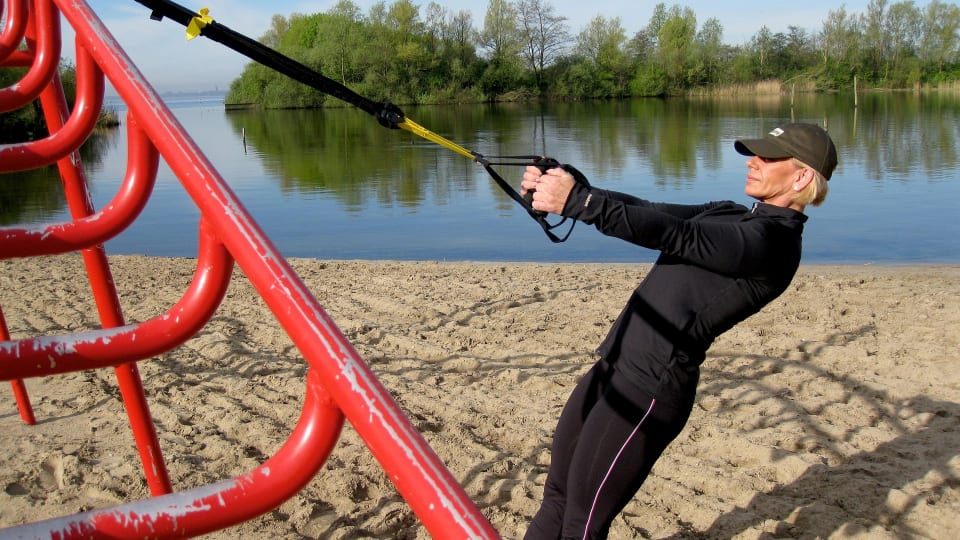
You don’t need a gym. A TRX Suspension Trainer can be set up using a door anchor at home, attached to a sturdy outdoor structure, or used in a park with an appropriate anchor point. The equipment is compact and portable, which is one of its practical advantages.
What you do need is a secure suspension point that can support your bodyweight, enough floor space to move freely, and an exercise mat for comfort during floor-based setup positions. Beyond that, the full range of TRX core exercises in this article is available to you wherever you choose to train.
Your core isn’t just a set of muscles to train in isolation. It’s a system that supports everything you do, from how you sit at a desk to how you move on a sports field. The TRX core exercises covered here give you a practical, adaptable way to build that system from the ground up, whether you’re just starting out or looking to add more challenge to an existing routine.
Start with the foundational movements, build your body awareness, and progress at a pace that reflects your current capacity. Pick two or three exercises from this article to try in your next session, and notice how your core responds to the instability element. What questions do you have about getting started?
DISCLAIMER: This article/page contains affiliate links. This means that if you make a purchase after clicking on one of these links, then we may receive a small commission – at no extra cost to you. See our full disclosure and Privacy Policy for more information. Thank you for supporting the site and helping make it the most helpful holistic health and fitness online magazine it aims to be!


0 Comments